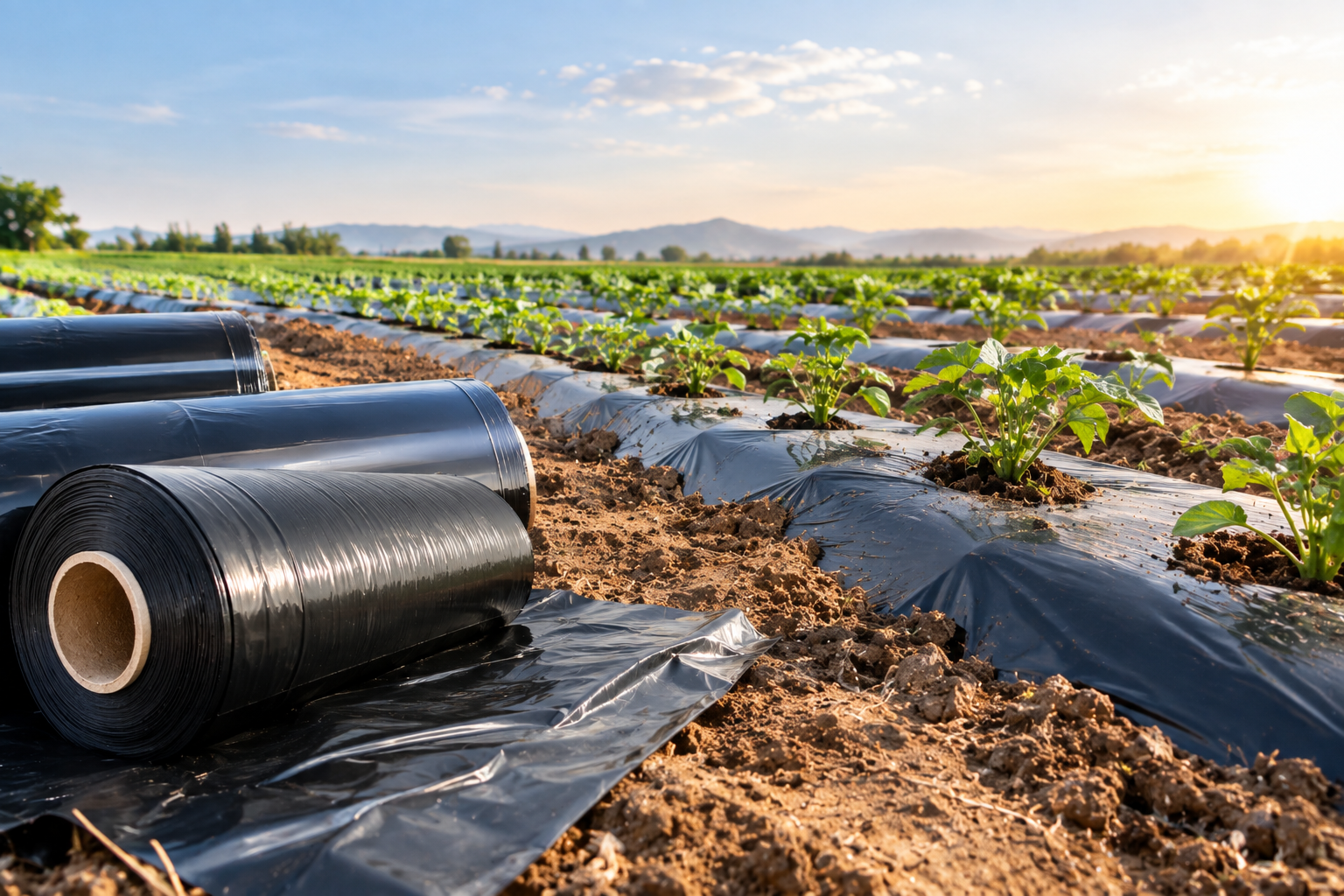
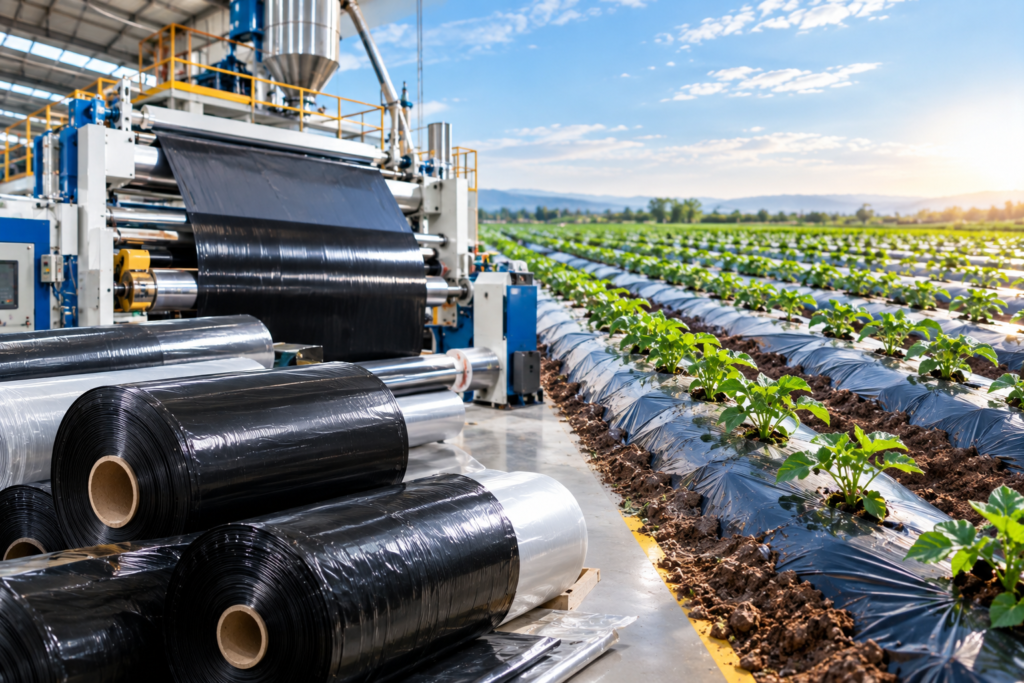
ZNY Agri manufactures agricultural mulch films for importers, distributors, agricultural projects and commercial growers that need specification-based soil covering solutions. Our range includes clear, black, silver-black, co-extruded and fully biodegradable mulch films. Common specifications cover 0.006–0.08 mm thickness, 0.5–4 m width and 50 m, 100 m or 200 m roll lengths, with custom options available for suitable orders. OEM and ODM services can cover PE or PBAT/PLA-based formulations, color structure, opacity, UV resistance, dimensions, perforation requirements, roll format and private-label packaging.
We manufacture specification-based greenhouse covering films using PE structures, EVA-enhanced formulations and PO film options. The product can be configured for standard covering, long-life UV resistance, anti-drip, anti-fog, thermal insulation or light diffusion. Rather than recommending one material for every project, we match the film structure to the crop, climate, greenhouse design, service-life target and purchasing budget. Separate PE, EVA and PO pages can provide deeper product-level comparisons, while this manufacturer page focuses on overall sourcing and customization capability.
Common greenhouse film thicknesses range from 80 to 200 μm. Typical widths include 4 m, 6 m, 8 m, 10 m, 12 m, 14 m and 16 m, while common roll lengths include 50 m, 100 m and 200 m. Custom dimensions can be discussed for suitable order quantities and production conditions. The correct thickness depends on greenhouse span, installation method, wind exposure, expected service life and local climate. A heavier film can provide more strength and durability, but it should still be matched to the structure and application.
Choose the film according to the field problem you need to solve. Clear film allows more solar energy to reach the soil and is often selected for warming. Black film blocks light at the soil surface and supports weed suppression. Silver-black film provides an opaque lower surface with a reflective upper surface for markets that require both soil coverage and reflected light. Biodegradable film should be selected according to crop duration, soil temperature, moisture, local standards and the required breakdown period. A lower price does not automatically mean a lower total field cost if the film tears during laying or performs inconsistently.
Important quality checks include resin or biodegradable-material consistency, thickness uniformity, width, roll length, tensile strength, elongation, impact resistance, opacity or light transmission, color consistency and winding quality. Relevant reference methods may include ISO 4593 for film thickness, ASTM D882 for tensile properties, ASTM D1709 for impact resistance, ISO 4892 or ASTM G154 for weathering, and EN 13655 or EN 13206 for agricultural film requirements. The inspection plan should be agreed before production because conventional PE, co-extruded and biodegradable films may require different performance and certification criteria.
Yes. OEM and ODM support can cover material structure, thickness, width, roll length, color, UV level, anti-drip, anti-fog, thermal or diffusion functions, label design and export packaging. Samples can be arranged to help buyers review basic appearance, thickness, transparency and specification suitability before a formal order. Sample availability, minimum order quantity and production time depend on the selected formulation, dimensions, packaging and order volume. These commercial details are confirmed during the quotation process so the proposal reflects the actual product and purchasing plan.
We welcome cooperation with greenhouse film importers, agricultural-material distributors, project suppliers and regional agents. For East African customers, selected specifications may be supported through our warehouse in Kenya, subject to current stock, roll size and order requirements. Other orders can be supplied from China according to the confirmed production and shipping plan. Agency discussions can cover target territory, product range, packaging, market positioning and expected sales support. Contact the sales team with your country and channel plan so the appropriate cooperation model can be evaluated.
Agricultural mulch film is a thin soil-covering material used to manage moisture, temperature, light and weed pressure around crops. Clear film is commonly selected where soil warming is the priority, while black film limits light at the soil surface for stronger weed suppression. Silver-black film combines a reflective upper surface with an opaque underside, and co-extruded structures can place different functions on each side of the film. Fully biodegradable mulch film provides an alternative for markets seeking reduced film-retrieval work, but its formulation should be matched to crop cycle, climate, soil conditions and applicable certification requirements.
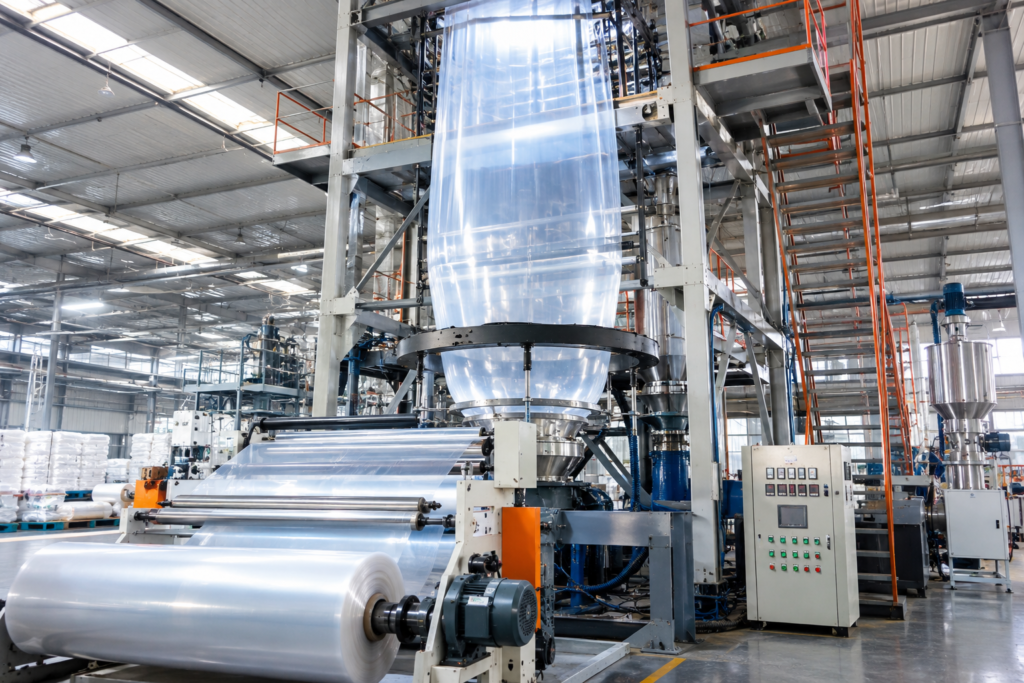
Production begins with a formulation based on PE resins or selected biodegradable materials, together with color masterbatch, antioxidants, UV stabilizers and other required additives. The blend is processed through blown-film extrusion, cooled and formed into a stable film tube before winding and slitting. For co-extruded mulch film, separate material layers are controlled to provide the required surface color, opacity or functional balance. Process control focuses on thickness uniformity, width, roll length, tensile behavior, elongation, appearance, winding quality and resistance to tearing during laying. Finished rolls are inspected and packed according to wholesale, project or private-label requirements.
Suitable for tomatoes, peppers, cucumbers, leafy vegetables and other row crops where moisture conservation, soil-temperature management and cleaner planting beds can support more consistent crop establishment. Film color and thickness should be selected according to season and weed pressure.
Used in watermelon, muskmelon and related crops to reduce soil-water evaporation, stabilize the root-zone environment and support earlier field establishment. Clear, black or silver-black structures can be selected according to climate and production objectives.
Provides soil coverage for strawberry and berry beds where moisture management, weed suppression and reduced fruit contact with wet soil are important. Width, color, perforation pattern and roll format can be adapted to the planting layout.
Designed for larger field-crop programs that require reliable roll consistency, mechanical laying performance and specification control. Thickness, tensile properties, width and roll length should be matched to equipment, field size and crop cycle.
Suitable for orchard rows, nursery production and protected cultivation where growers need moisture retention, cleaner soil surfaces or targeted weed control. PE and biodegradable options can be evaluated according to use period and post-season management requirements.
The specification discussion focused on crop cycle, local temperature, weed pressure and laying method instead of treating all mulch films as interchangeable. The sample stage helped us compare opacity, thickness and roll quality before confirming the order.

We required clear, black and silver-black products in different widths for our distributor network. The OEM process helped us organize the range, confirm private-label packaging and reduce confusion between similar film specifications.

The team explained where conventional PE film and biodegradable film should be evaluated differently. That guidance helped us select a more realistic specification for the crop cycle, climate and local end-of-season handling.

Share your target market, crop application and purchasing plan so the sales team can identify the technical and commercial information required for a practical recommendation.
Confirm film type, material, color, thickness, width, roll length, crop cycle, laying method, UV requirement, perforation, packaging and estimated order quantity.
Compare clear, black, silver-black, co-extruded or biodegradable mulch film options and select the structure that matches field performance, budget and market positioning.
Arrange available samples or a specification sample to review color, opacity, thickness, flexibility, surface appearance, roll presentation and general suitability.
Evaluate the film under your laying equipment, field or laboratory conditions and confirm whether dimensions, strength, opacity or formulation adjustments are required before production.
Approve the final specification, quantity, private-label packaging and shipping requirements, then proceed with production, inspection and order execution.
ZNY Agri is a Chinese agricultural materials manufacturer and global supplier specializing in greenhouse films, insect nets, shade nets, mulch films, weed control fabrics, drip irrigation tapes and fiberglass rods.