
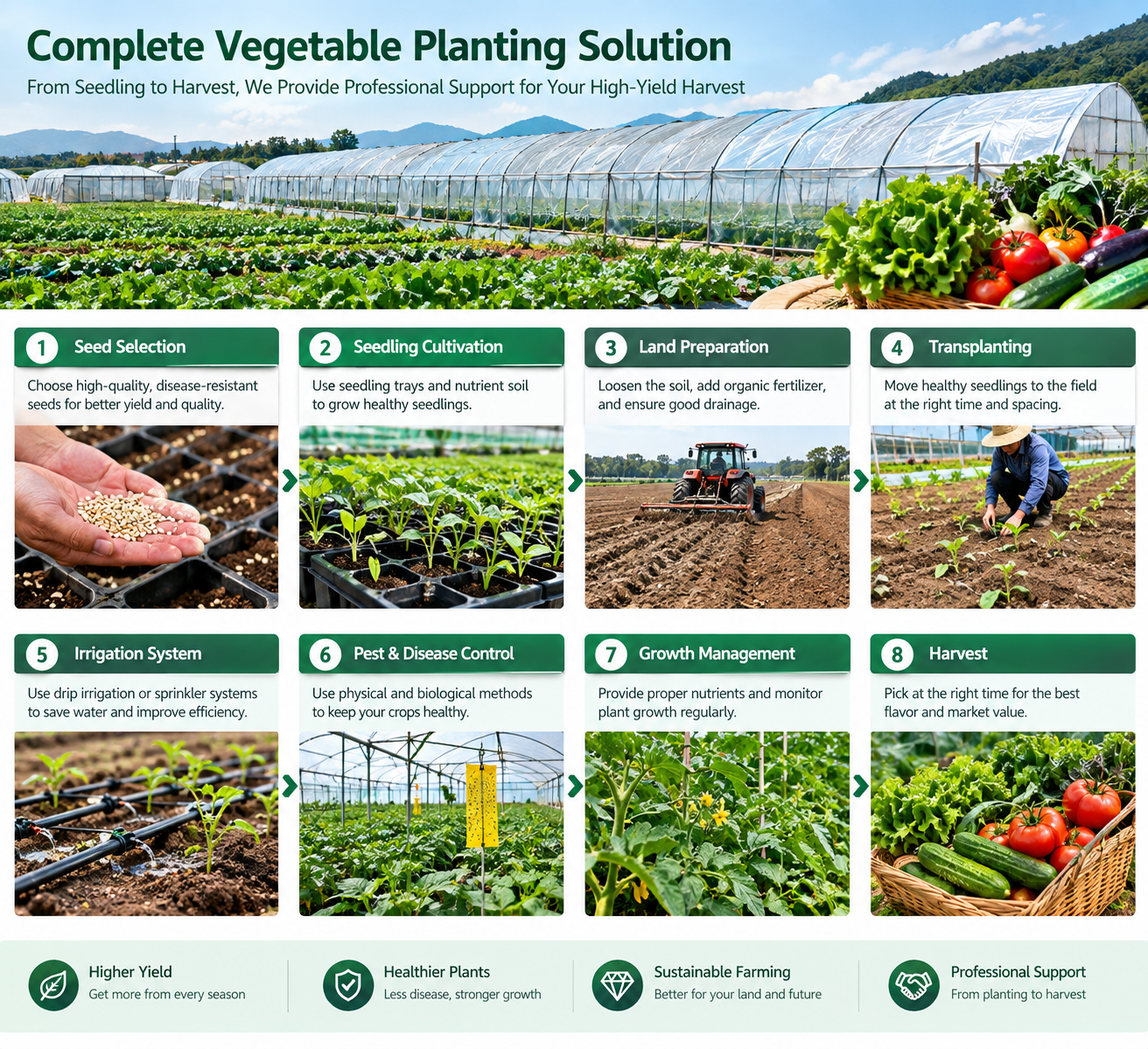
A vegetable cultivation solution refers to an integrated set of crop-covering, pest-control, shading, ground-management, irrigation and support materials selected for a specific vegetable, climate and production cycle. It can serve greenhouse, low-tunnel and open-field projects without forcing every farm into the same specification.
Final product selection should always be confirmed against the vegetable, climate, pest, soil, water and installation conditions.
Provide the vegetable type, planting area, bed and row dimensions, crop spacing, cultivation method, location, season, temperature and solar conditions, target pests, water source, expected service life and order quantity. Photos or drawings are strongly recommended.
Choose the mesh according to the smallest target pest, then check whether the remaining airflow is suitable for the crop and climate. Common agricultural options include 24–80 mesh, but a higher mesh count can reduce ventilation, so it should not be selected by pest exclusion alone.
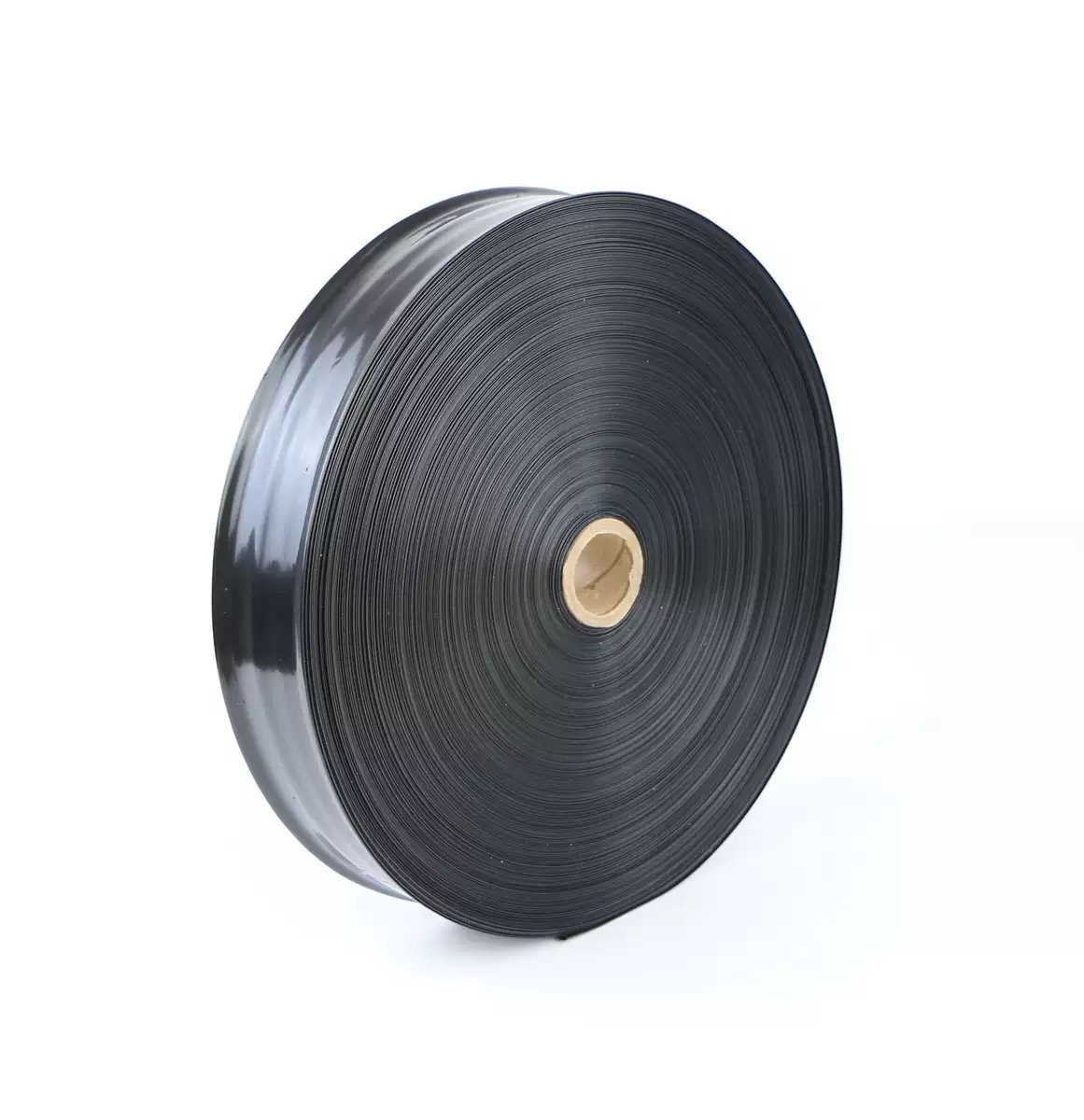
Black film is commonly used for weed suppression and moisture retention; clear film can raise soil temperature faster; silver-black film can combine weed control with reflective pest-management benefits. The choice depends on crop, season, climate and production objective.
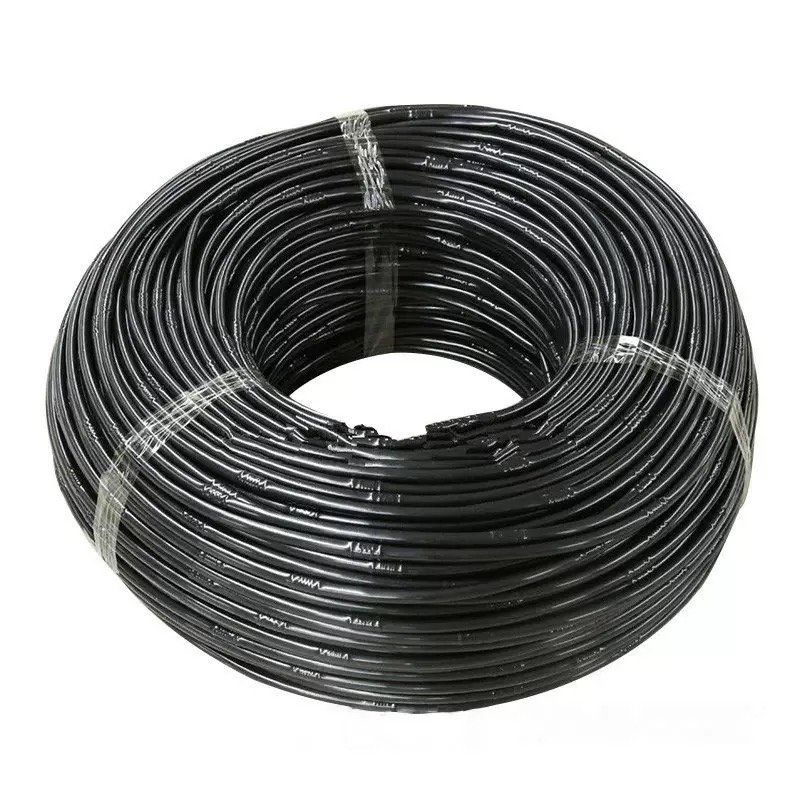
Emitter spacing should follow crop spacing and soil wetting behavior. Common options include 10, 20, 30, 40 and 50 cm, with typical flow choices of 1, 2, 4 or 8 L/h. Working pressure and filtration must also match the irrigation design.
Yes. Films, nets, fabrics, drip tape and fiberglass rods can be customized within production limits, including dimensions, colors, UV level, mesh, GSM, emitter spacing, flow, roll format, labels and packaging.
Inspection can cover dimensions, film thickness, fabric GSM, tensile performance, light or shade characteristics, water permeability and emitter flow. Relevant methods may include ISO, ASTM or EN standards listed in the product documentation; the exact method and acceptance criteria must be agreed before production.
Select each category by the production problem it must solve: climate exposure, pest pressure, weeds, water use, crop support or season extension.
PE, EVA and PO films for greenhouses and tunnels, with configurable UV stability, light transmission, diffusion, thermal, anti-fog and anti-drip functions.
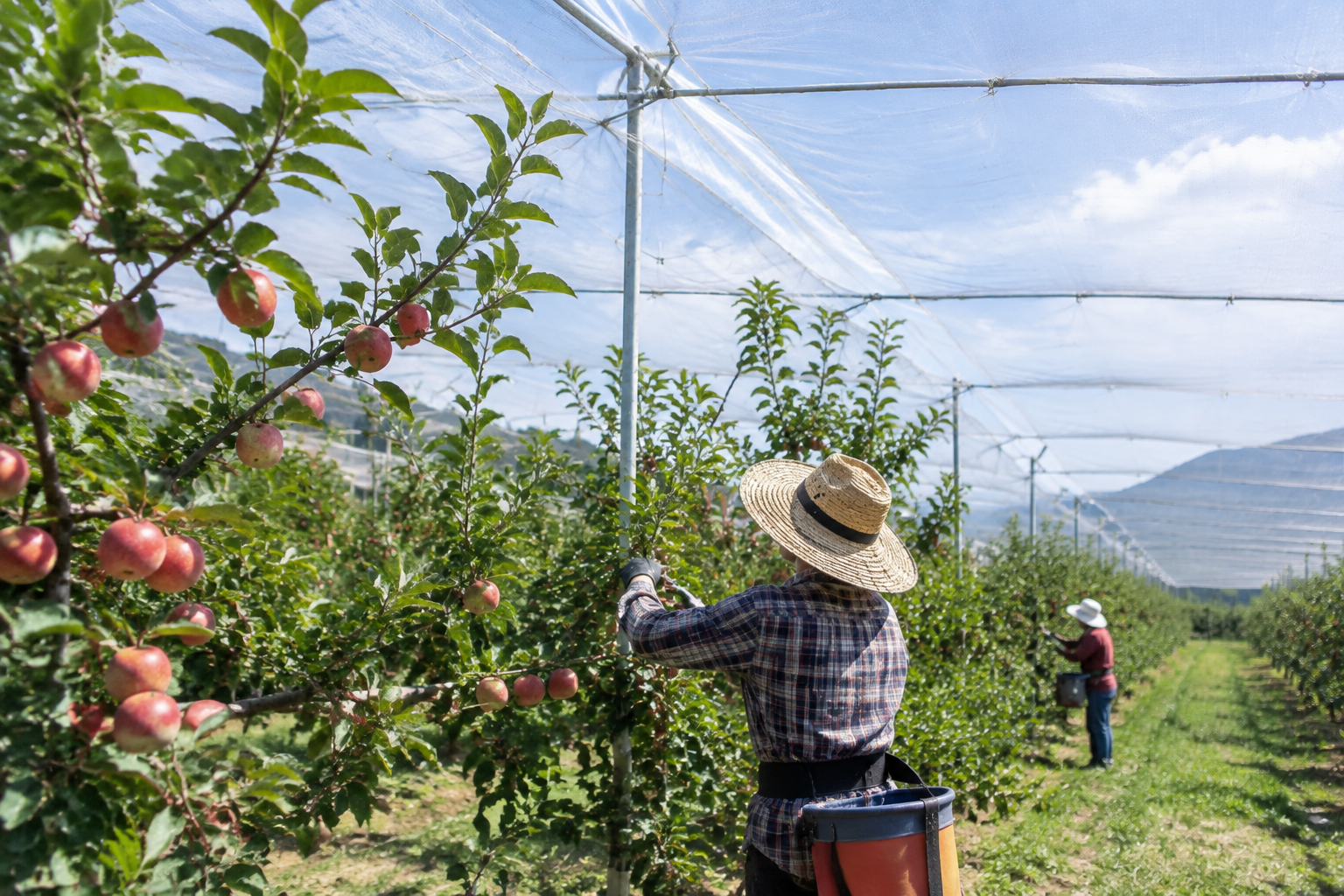
HDPE insect nets and shade nets selected by target pest, mesh, airflow, solar intensity and crop light demand. Shade options commonly range from 30% to 95%.
Black, clear, silver-black or other mulch films plus permeable weed-control fabrics for soil-temperature management, moisture retention and weed suppression.
Drip tape for targeted irrigation and fertigation, together with lightweight fiberglass rods for low tunnels, net supports and plant-support applications.
The product mix changes with crop spacing, root depth, canopy density, season length, target pest and the balance required between protection and ventilation.
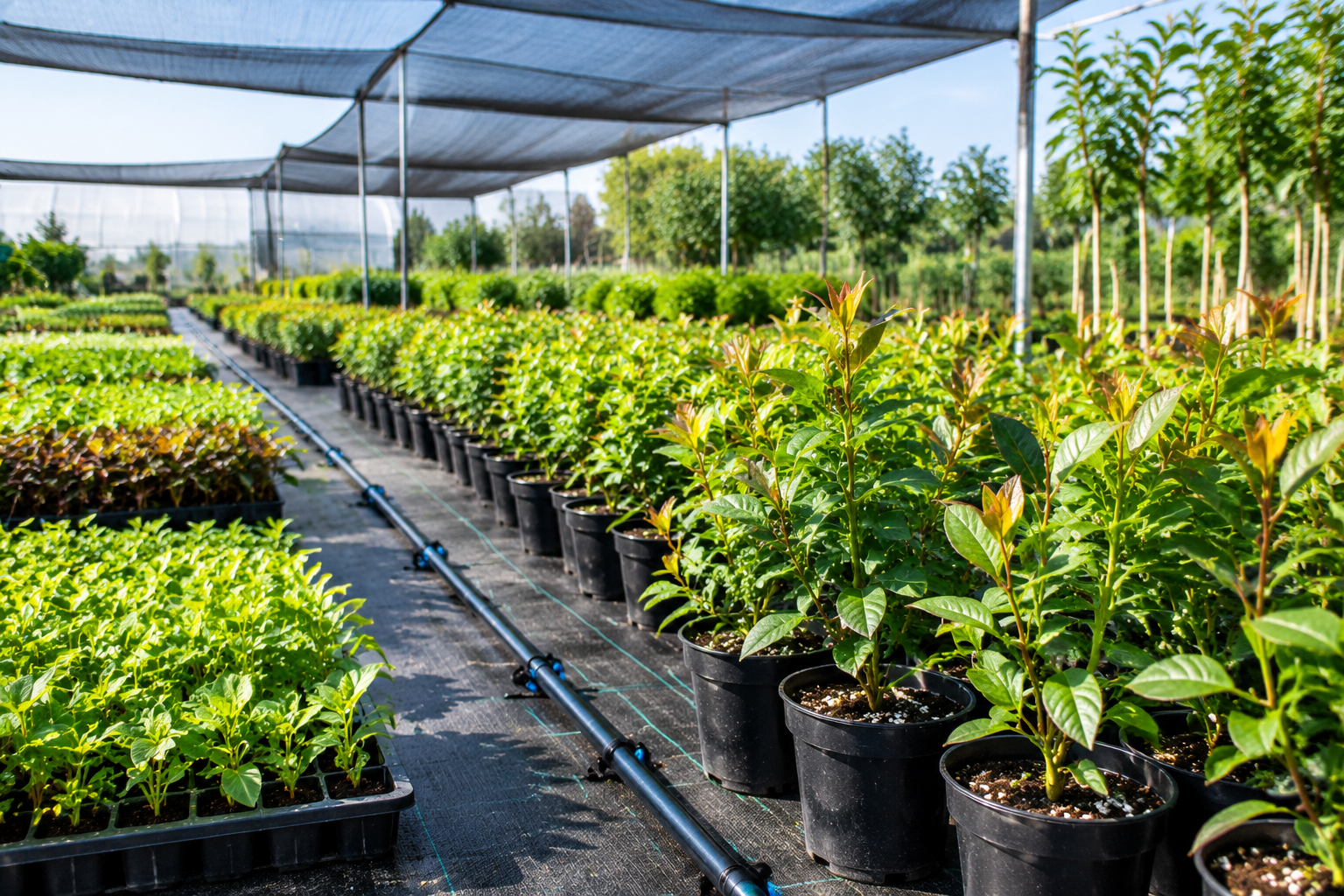
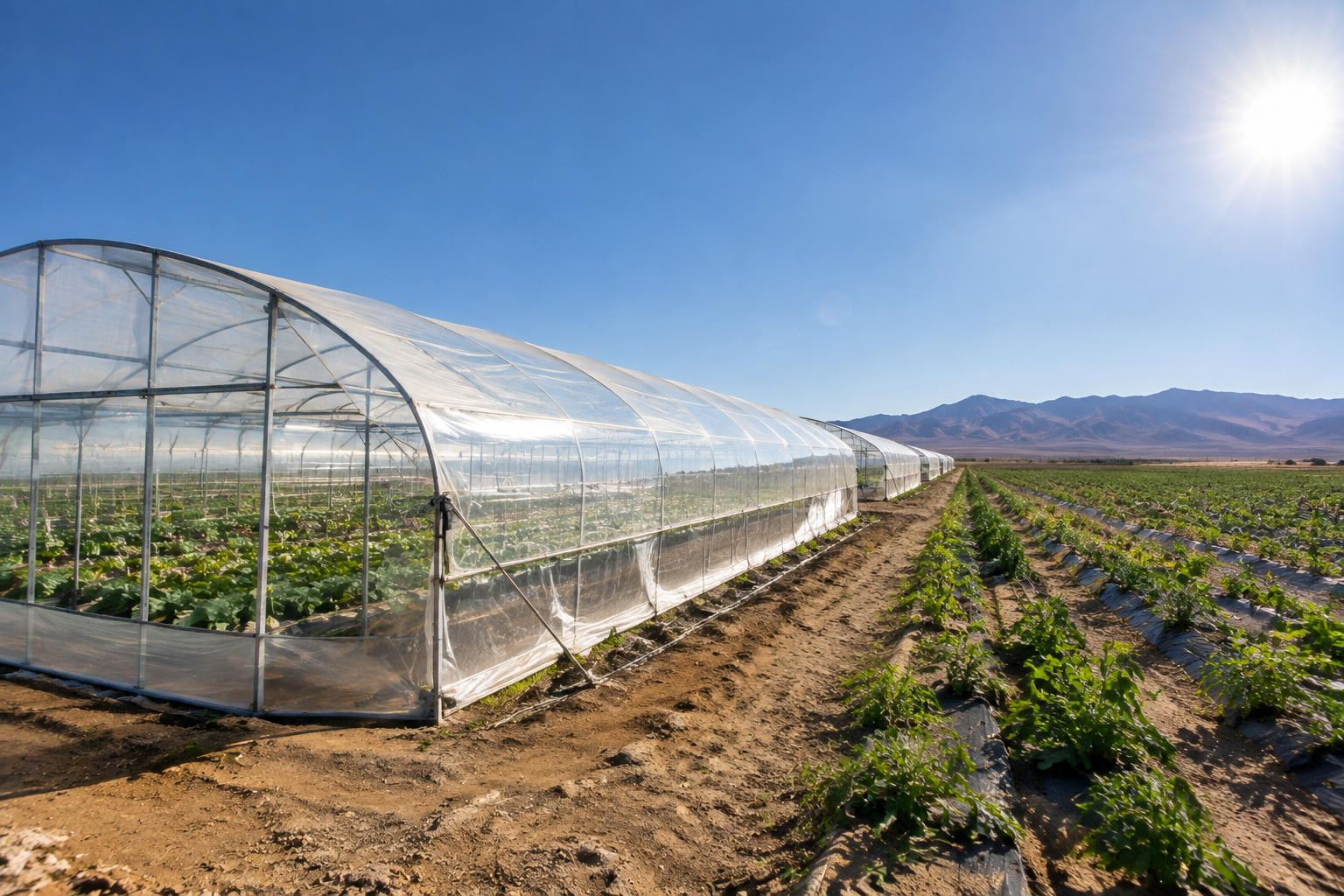
Use these packages as a starting point, then adjust film type, mesh, shade rate, GSM, emitter spacing, flow rate, dimensions, UV level and packaging.
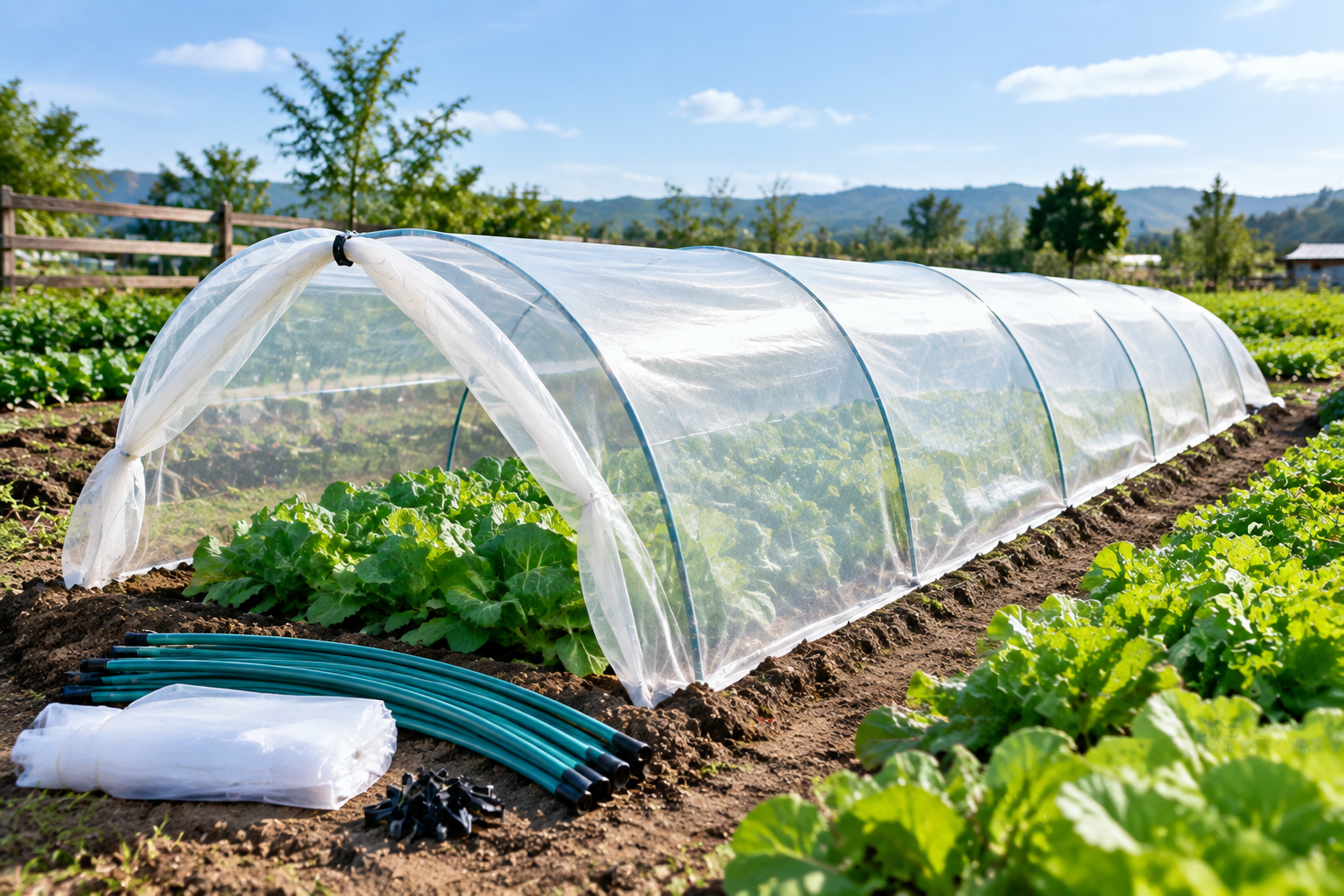
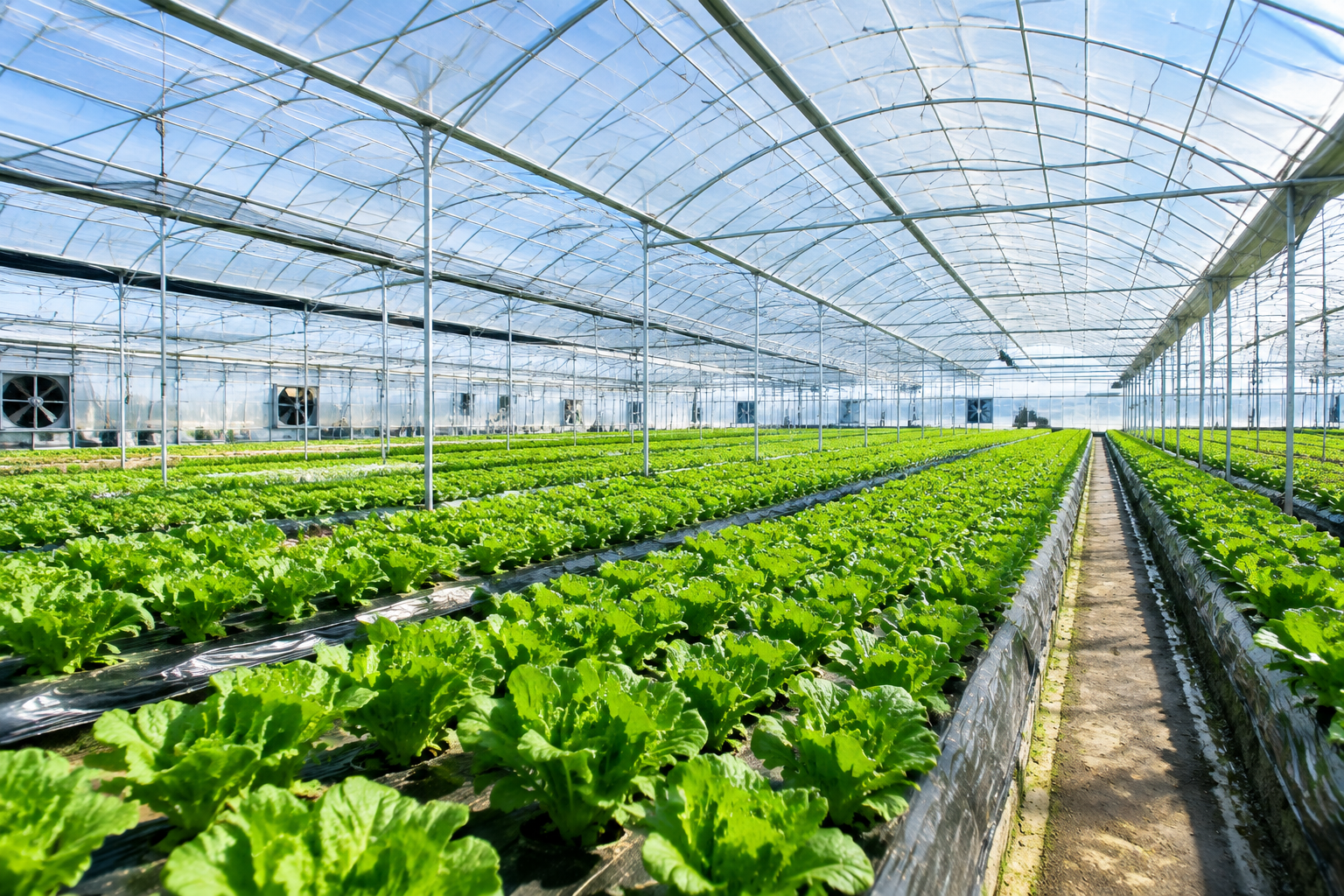
For seedlings, leafy greens and short-cycle crops: tunnel film, insect net, mulch film, drip tape and bendable fiberglass rods. The package is configured by bed width, row length, planting density and expected season.
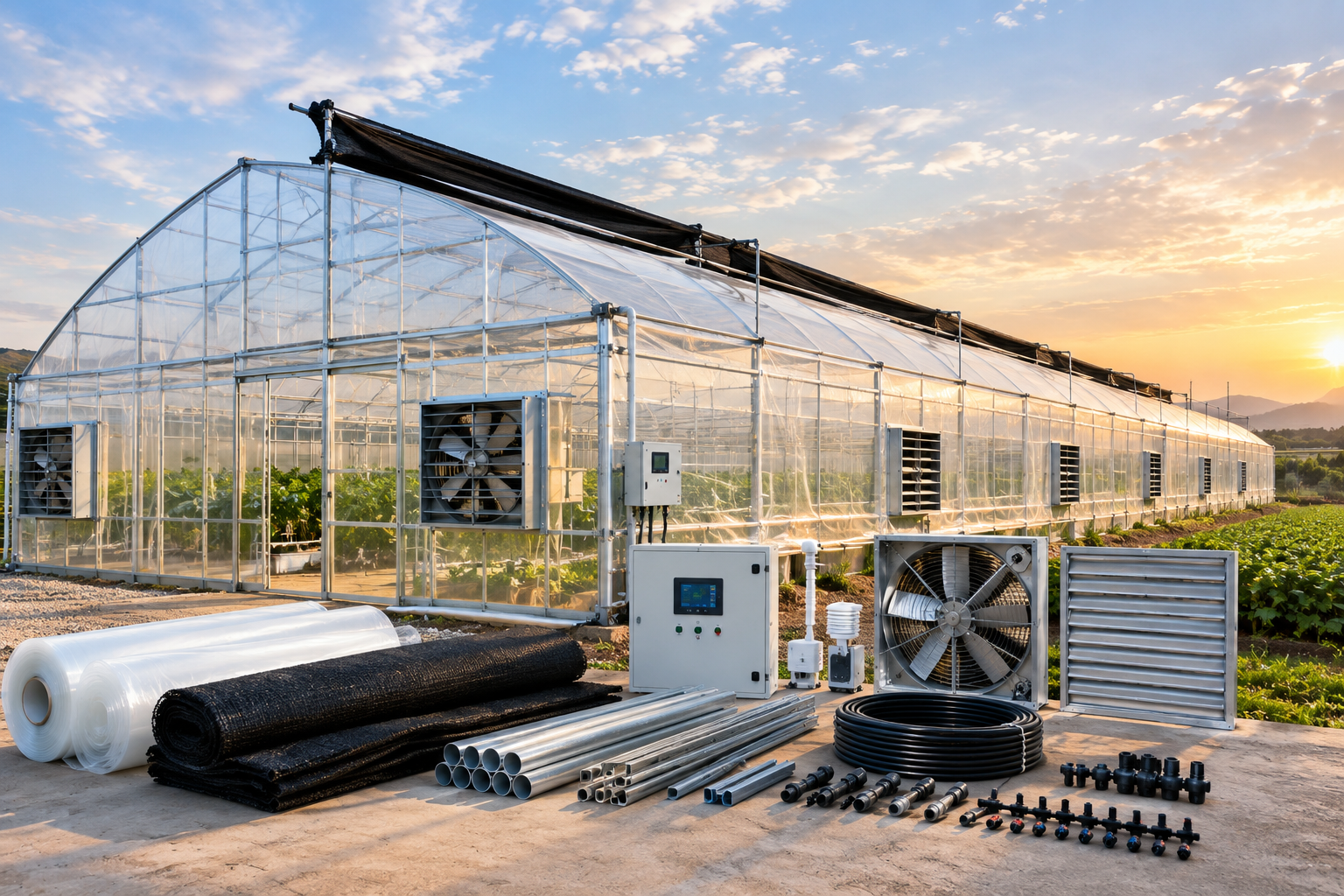
For intensive tomato, cucumber, pepper and strawberry production: greenhouse film, ventilation-compatible insect net, suitable shade net, drip irrigation, mulch or weed-control fabric and support accessories.
For larger field blocks and seasonal production: crop-specific mulch film, drip tape, insect-protection or shade net and optional ground cover. Roll dimensions and emitter layouts can be coordinated with field machinery and planting rows.
Better vegetable production does not come from choosing the highest specification in every category. It comes from matching performance, cost and service life to the farm’s actual conditions.
Coordinate crop cover, pest exclusion, shading, ground control, irrigation and support materials through one product plan.
Select materials by vegetable type, planting density, crop cycle, local weather, pest size, soil and water conditions.
Balance insect exclusion and shade performance with the light and airflow required for healthy vegetable growth.
Configure film thickness and width, net mesh and shade rate, fabric GSM, drip flow and spacing, and rod diameter within production limits.
Agree on dimensional, physical, optical or flow inspection items before production and retain the approved specification for repeat orders.
Coordinate roll formats, labels, packing and loading for distributor assortments, trial projects and larger commercial orders.
A five-step workflow converts crop and site information into a clear, reviewable list of materials before production begins.
Share the vegetable type, planting area, greenhouse or bed dimensions, location, growing season, pest pressure, water source and target service life.
Select the protection, shading, ground-management, irrigation and support components required for the production model.
Confirm dimensions, performance functions, colors, mesh, GSM, emitter spacing, flow, roll lengths, labels and samples.
Produce and inspect the agreed characteristics, such as thickness, width, tensile performance, shade rate, water permeability or emitter-flow consistency.
Consolidate packing and shipment documentation, then use the approved specification as the baseline for reorders or farm expansion.
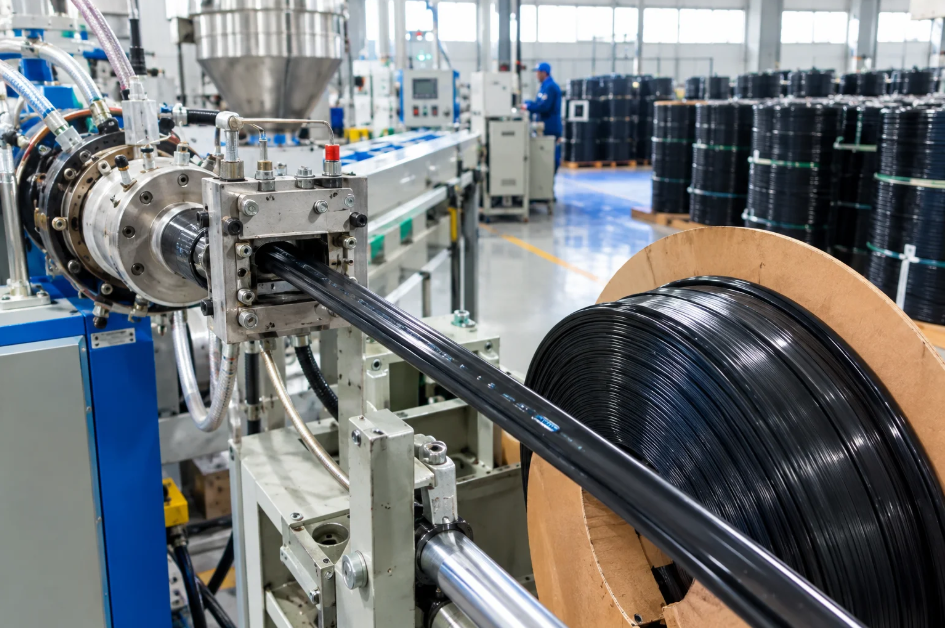
A vegetable distributor serving tomato and pepper growers required one coordinated assortment for protected cultivation. The proposed system combined greenhouse film, insect net, season-specific shade net, mulch film, drip tape and fiberglass supports. Specifications were organized around local solar exposure, pest pressure, row spacing and installation practice. This is a representative configuration; replace it with verified customer results before presenting it as a completed case study.
ZNY Agri is a Chinese agricultural materials manufacturer and global supplier specializing in greenhouse films, insect nets, shade nets, mulch films, weed control fabrics, drip irrigation tapes and fiberglass rods.