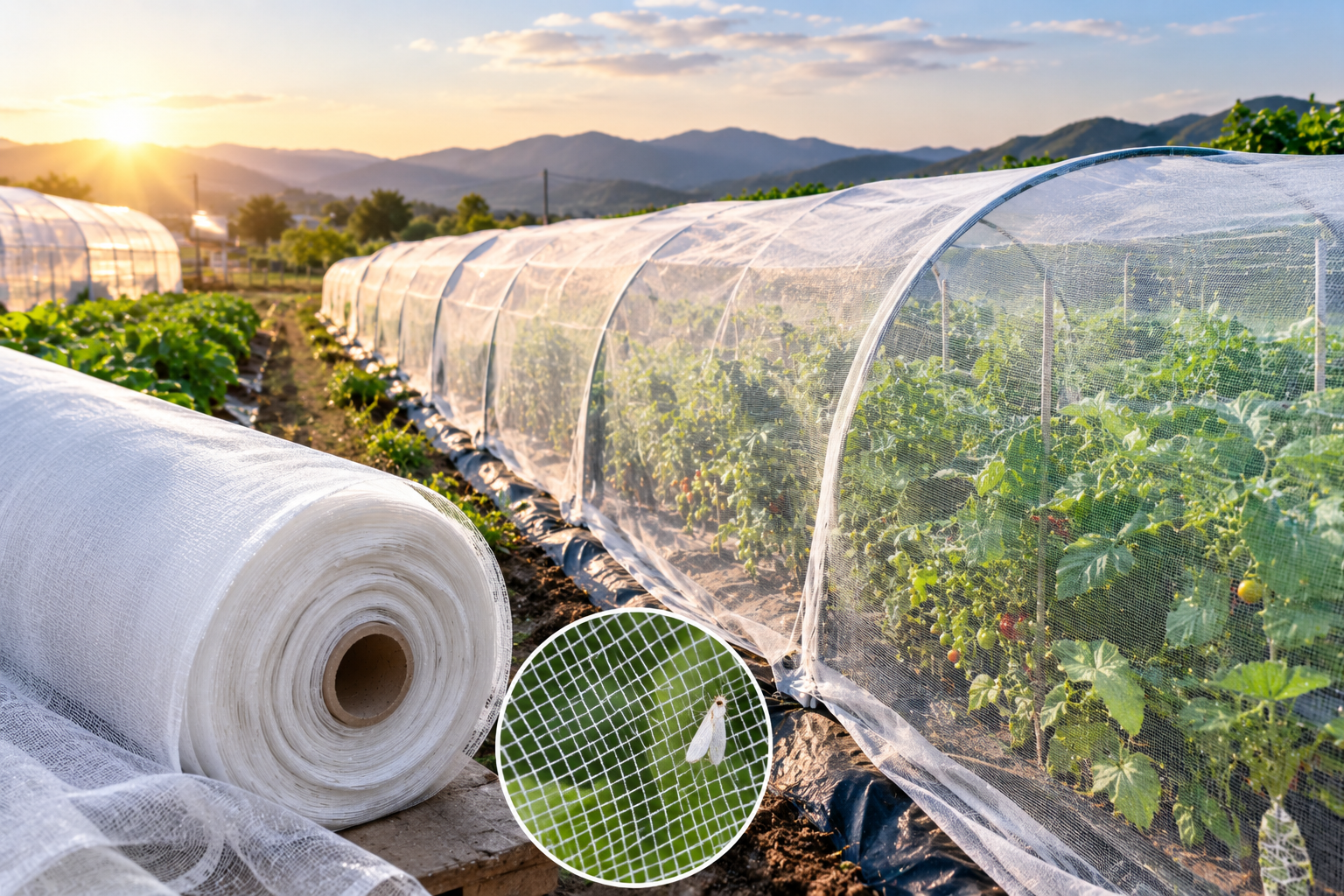
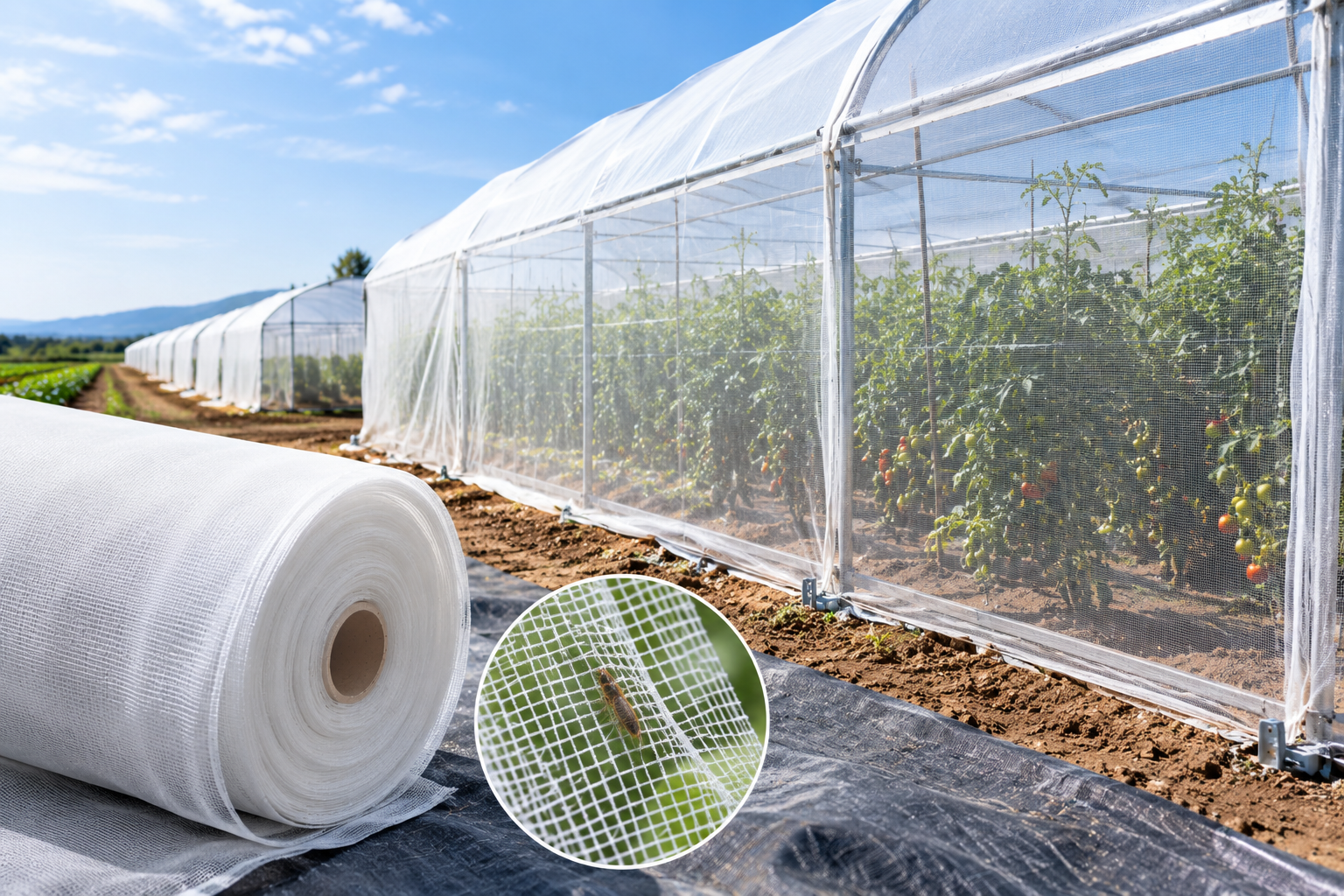
ZNY Agri manufactures HDPE insect nets for agricultural importers, greenhouse suppliers, farm distributors and commercial growing projects that need physical crop protection without unnecessarily restricting ventilation and light. Common specifications include 16–120 mesh, 1–18 m widths and 0.10–0.30 mm thickness, with custom roll lengths, colors and packaging available for suitable orders. UV stabilization, mesh structure, yarn strength and opening uniformity can be matched to target pests, crop type, local climate and expected outdoor service life. OEM and ODM support covers mesh count, dimensions, color, material formulation, edge finishing and private-label packaging.
We manufacture specification-based greenhouse covering films using PE structures, EVA-enhanced formulations and PO film options. The product can be configured for standard covering, long-life UV resistance, anti-drip, anti-fog, thermal insulation or light diffusion. Rather than recommending one material for every project, we match the film structure to the crop, climate, greenhouse design, service-life target and purchasing budget. Separate PE, EVA and PO pages can provide deeper product-level comparisons, while this manufacturer page focuses on overall sourcing and customization capability.
Common mesh-count options range from 16 to 120 mesh. Typical widths range from 1 to 18 m, while common thickness references range from approximately 0.10 to 0.30 mm depending on yarn structure and product design. Roll length can be customized according to production and packaging requirements. The correct mesh should be selected according to the insect being controlled and the required airflow. A higher mesh count creates smaller openings, but it may also increase ventilation resistance, particularly in hot or humid greenhouse conditions.
Start by identifying the smallest target insect and then balance exclusion with greenhouse airflow. Larger openings may be suitable for bigger pests and provide stronger ventilation, while finer mesh is required for smaller insects such as whiteflies, thrips or aphids. However, mesh labels alone are not enough because yarn diameter and actual opening dimensions can vary between constructions. Buyers should request the opening specification, sample the fabric and consider local temperature, humidity, fan capacity and crop sensitivity before confirming a bulk order.
Important quality checks include HDPE raw-material consistency, mesh-count accuracy, opening uniformity, yarn diameter, fabric weight, width, tensile strength, elongation, edge stability, light transmission, ventilation and UV-weathering performance. Relevant reference methods may include ASTM D5035 for textile tensile properties, ASTM D3776 or ISO 9864 for mass per unit area, and ISO 4892 or ASTM G154 for accelerated UV weathering. The exact inspection plan should be agreed before production because different mesh constructions and end uses may require different acceptance criteria.
Yes. OEM and ODM support can cover material structure, thickness, width, roll length, color, UV level, anti-drip, anti-fog, thermal or diffusion functions, label design and export packaging. Samples can be arranged to help buyers review basic appearance, thickness, transparency and specification suitability before a formal order. Sample availability, minimum order quantity and production time depend on the selected formulation, dimensions, packaging and order volume. These commercial details are confirmed during the quotation process so the proposal reflects the actual product and purchasing plan.
We welcome cooperation with greenhouse film importers, agricultural-material distributors, project suppliers and regional agents. For East African customers, selected specifications may be supported through our warehouse in Kenya, subject to current stock, roll size and order requirements. Other orders can be supplied from China according to the confirmed production and shipping plan. Agency discussions can cover target territory, product range, packaging, market positioning and expected sales support. Contact the sales team with your country and channel plan so the appropriate cooperation model can be evaluated.
Agricultural insect net, also called anti-insect net or insect-proof mesh, is a physical crop-protection fabric made mainly from HDPE yarn with UV and anti-aging additives. It helps reduce the entry of insects while allowing light and air to pass through the protected area. Selection should not be based on mesh count alone. Buyers should compare target pest size, actual opening dimensions, yarn diameter, ventilation, light transmission, fabric weight, tensile strength, width and UV service life. A finer mesh provides stronger exclusion but can reduce airflow, so the specification must be matched to crop sensitivity, temperature and greenhouse ventilation conditions.
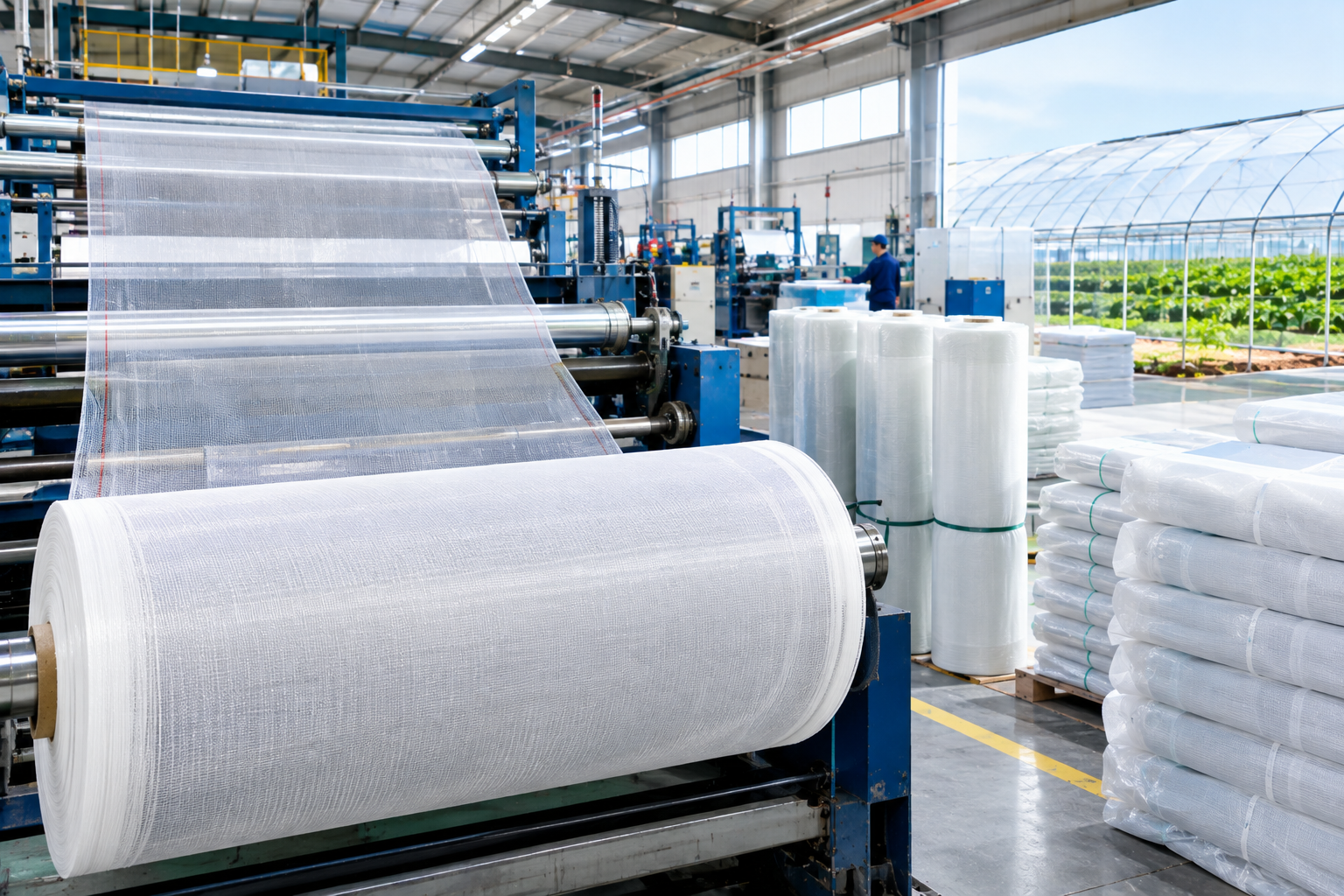
Production begins with HDPE resin blended with UV stabilizers, anti-aging additives and color masterbatch according to the required climate and service life. The material is extruded and drawn into controlled yarns, then knitted or woven into the specified mesh structure. The fabric is heat-set to improve dimensional stability before inspection, cutting, edge finishing, winding and packaging. Process control focuses on mesh-count accuracy, opening uniformity, yarn consistency, width, tensile performance, ventilation, surface appearance and resistance to edge fraying. Finished rolls can be checked against agreed dimensions, weight, strength and packaging requirements before shipment.
Suitable for tomatoes, cucumbers, peppers, leafy vegetables and other greenhouse crops that require physical protection from common flying pests. Mesh count should be selected together with ventilation needs, local temperature and target insect size.
Provides a controlled barrier for young plants, propagation areas and nursery structures where early pest pressure can cause significant crop loss. Fine, uniform openings and stable edges help support consistent enclosure of the growing area.
Used around fruit trees, berry production and selected orchard structures to reduce pest entry while maintaining airflow. Width, tensile strength, UV level and installation method can be customized for larger spans and outdoor exposure.
Suitable for flowers, ornamental plants and horticultural production where growers need pest exclusion without excessively reducing light. White or light-colored nets can be evaluated where brightness and crop appearance are important.
Supports open-field vegetable beds, small tunnels and lower-pesticide production systems by providing a physical barrier against insects. The net should be installed with secure edges and matched to crop height, field layout and wind conditions.
The recommendation considered the target pest, greenhouse temperature and ventilation requirement instead of simply pushing the finest mesh. The sample helped us compare opening uniformity, airflow and edge quality before placing the order.

We needed several mesh counts and roll widths for different vegetable and nursery customers. The OEM process made the specifications easier to identify and improved the packaging for our local distribution network.

The team explained how yarn diameter, mesh opening and UV stabilization affect airflow and outdoor durability. That guidance helped us avoid selecting a net that was too dense for our hot-climate greenhouse project.

Share your target market, crop, greenhouse or field application and purchasing plan so the sales team can prepare a relevant insect-net recommendation.
Confirm target pests, mesh count, opening requirement, width, roll length, color, UV life, edge finishing, packaging and estimated order quantity.
Compare suitable mesh structures and specifications according to pest exclusion, ventilation, light transmission, strength, service life, budget and market positioning.
Arrange available samples or a specification sample to review mesh opening, yarn quality, color, width, edge stability, flexibility and packaging presentation.
Evaluate the net under your greenhouse, tunnel or field conditions and confirm airflow, light, pest exclusion and installation suitability before production.
Approve the final specification, quantity, private-label packaging and shipping details, then proceed with production, inspection and order execution.
ZNY Agri is a Chinese agricultural materials manufacturer and global supplier specializing in greenhouse films, insect nets, shade nets, mulch films, weed control fabrics, drip irrigation tapes and fiberglass rods.