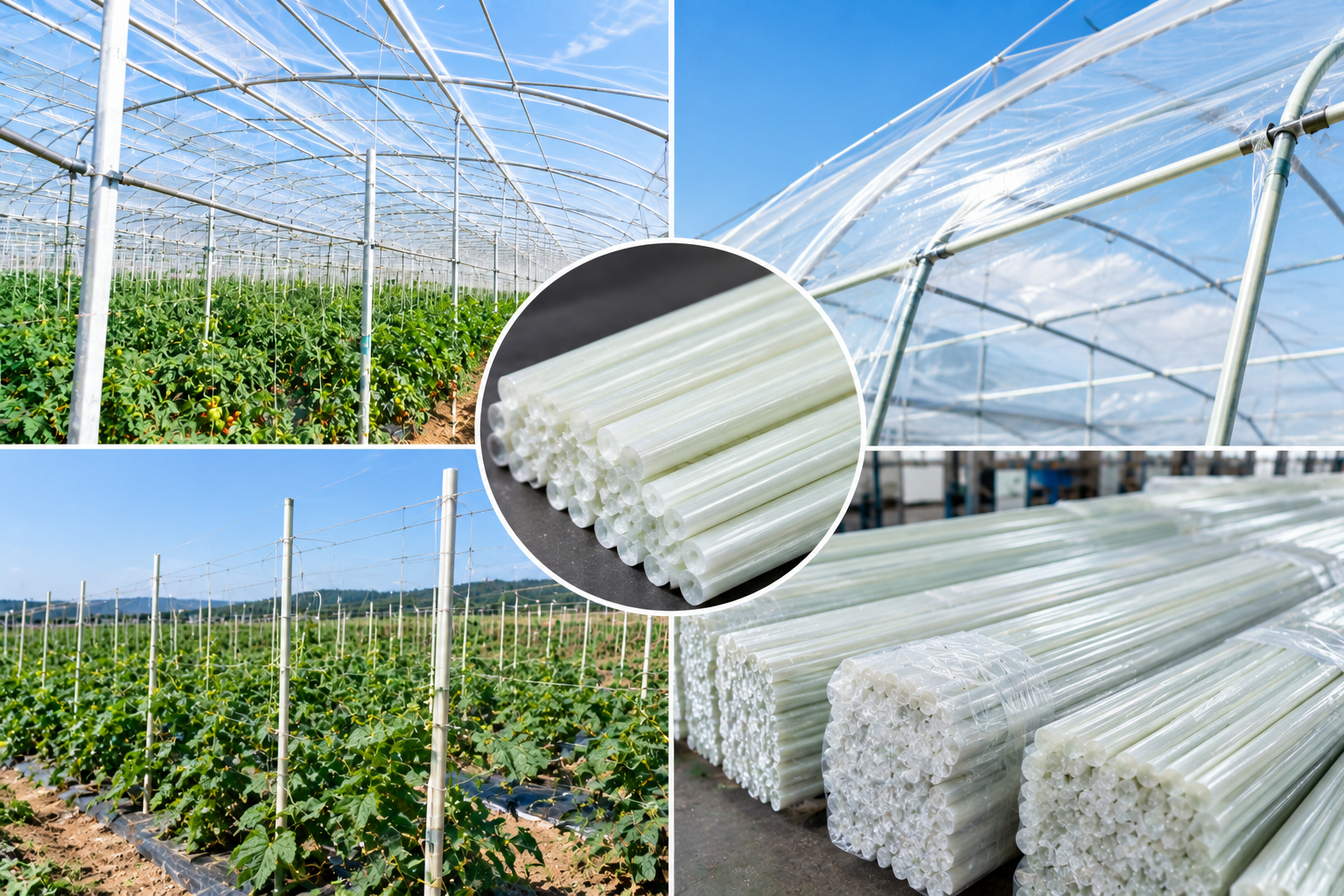
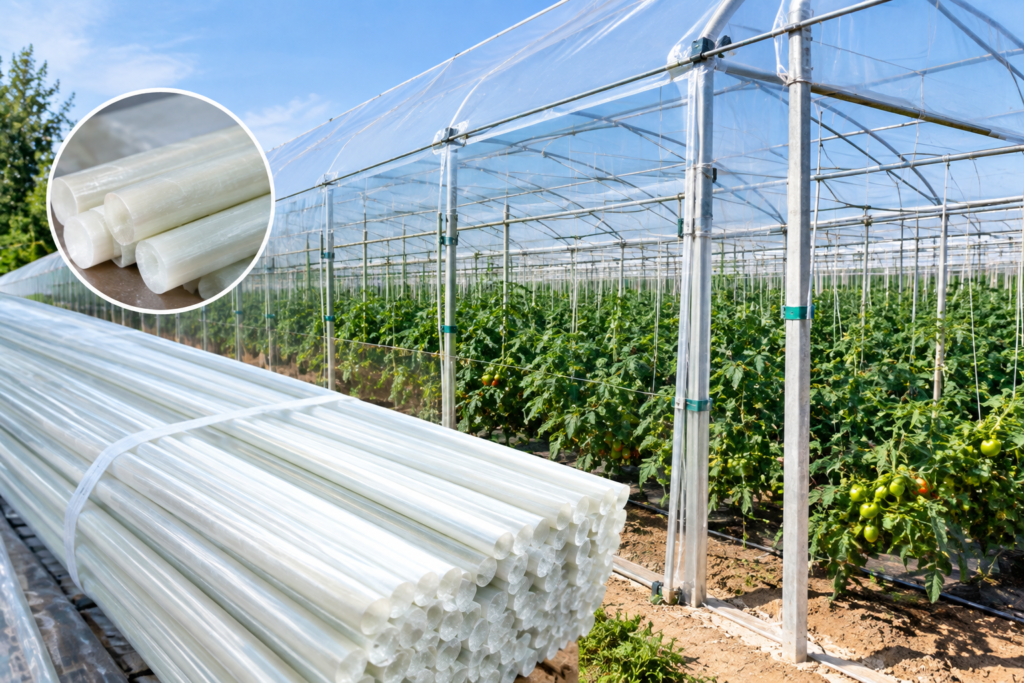
ZNY Agri manufactures pultruded fiberglass rods for agricultural distributors, greenhouse suppliers, vineyard projects, nurseries and commercial growers that need lightweight, corrosion-resistant support products. Common solid rod diameters range from 4–16 mm, with standard lengths from 0.6–3 m and longer custom specifications available for suitable orders. Buyers can select E-glass reinforcement, resin systems, UV stabilization, color and smooth, sanded or PVC-coated surfaces. OEM and ODM services cover diameter, length, flexibility, surface finish, packaging and private-label requirements for wholesale and project supply.
We manufacture specification-based greenhouse covering films using PE structures, EVA-enhanced formulations and PO film options. The product can be configured for standard covering, long-life UV resistance, anti-drip, anti-fog, thermal insulation or light diffusion. Rather than recommending one material for every project, we match the film structure to the crop, climate, greenhouse design, service-life target and purchasing budget. Separate PE, EVA and PO pages can provide deeper product-level comparisons, while this manufacturer page focuses on overall sourcing and customization capability.
Common greenhouse film thicknesses range from 80 to 200 μm. Typical widths include 4 m, 6 m, 8 m, 10 m, 12 m, 14 m and 16 m, while common roll lengths include 50 m, 100 m and 200 m. Custom dimensions can be discussed for suitable order quantities and production conditions. The correct thickness depends on greenhouse span, installation method, wind exposure, expected service life and local climate. A heavier film can provide more strength and durability, but it should still be matched to the structure and application.
Available options include UV stabilizers, anti-drip agents, anti-fog systems, thermal additives, light-diffusion additives and antioxidants. These functions solve different problems: UV stabilization supports outdoor service life, anti-drip helps condensation form a film rather than large droplets, anti-fog supports clearer light transmission, thermal additives reduce night-time heat loss, and diffusion distributes light more evenly through the crop canopy. The formulation should be selected according to climate, crop sensitivity, season and greenhouse management rather than combined mechanically into an unnecessarily expensive film.
Key checks include raw-material consistency, thickness uniformity, roll appearance, tensile strength, elongation, light transmission, haze, anti-drip behavior and UV-weathering performance. Common reference methods include ISO 4593 for film thickness, ASTM D882 or ISO 527 for tensile properties, ASTM D1003 or ISO 13468 for optical performance, and ASTM G154 or ISO 4892 for accelerated weathering. The exact inspection plan should be agreed before production because not every market or order requires the same tests, reports or acceptance criteria.
Yes. OEM and ODM support can cover material structure, thickness, width, roll length, color, UV level, anti-drip, anti-fog, thermal or diffusion functions, label design and export packaging. Samples can be arranged to help buyers review basic appearance, thickness, transparency and specification suitability before a formal order. Sample availability, minimum order quantity and production time depend on the selected formulation, dimensions, packaging and order volume. These commercial details are confirmed during the quotation process so the proposal reflects the actual product and purchasing plan.
We welcome cooperation with greenhouse film importers, agricultural-material distributors, project suppliers and regional agents. For East African customers, selected specifications may be supported through our warehouse in Kenya, subject to current stock, roll size and order requirements. Other orders can be supplied from China according to the confirmed production and shipping plan. Agency discussions can cover target territory, product range, packaging, market positioning and expected sales support. Contact the sales team with your country and channel plan so the appropriate cooperation model can be evaluated.
A fiberglass rod, also called an FRP rod or glass fiber stake, is a composite support product made from continuous glass fibers and resin through pultrusion. Compared with conventional metal stakes, it is lightweight, electrically non-conductive, resistant to moisture and corrosion, and does not rust in greenhouse or outdoor environments. Product selection should consider diameter, length, fiber content, resin type, flexural strength, tensile performance, UV resistance and surface treatment. We help buyers match these variables to crop support, greenhouse framing, vineyard, nursery or project requirements instead of treating every application as the same generic rod.
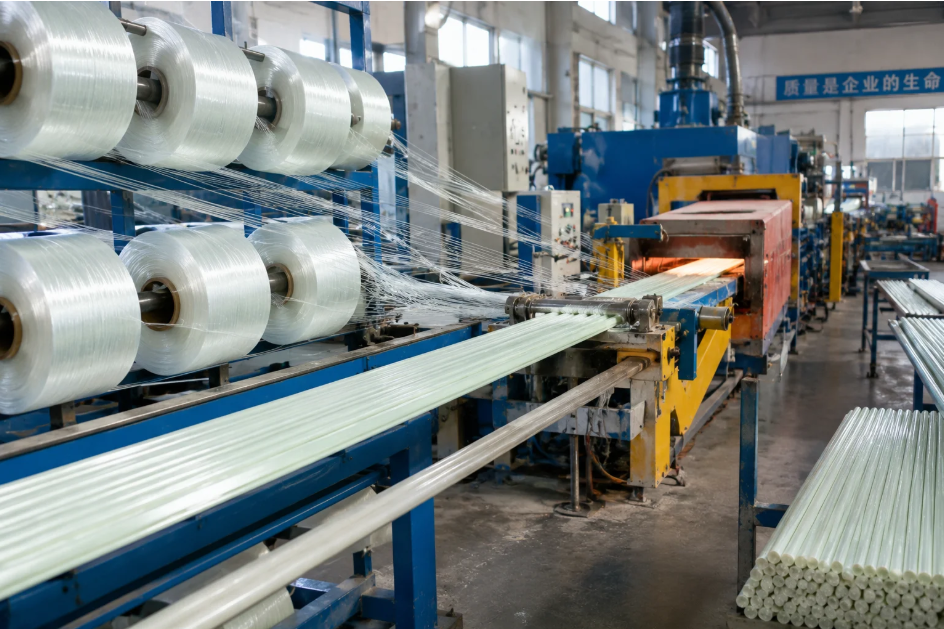
Production begins by arranging continuous glass fiber rovings and guiding them through a controlled resin impregnation system. The saturated fibers enter a heated pultrusion die, where the rod profile is formed and the resin is cured into a stable composite structure. After cooling, the rods are pulled at a controlled speed, cut to the required length and prepared for the selected surface finish and packaging. Process control focuses on fiber alignment, resin impregnation, diameter consistency, surface quality, straightness, flexural behavior and resistance to cracking or fiber exposure. Inspection requirements can be agreed according to the application and order specification.
Suitable for supporting tomatoes, cucumbers, peppers, beans and other climbing or fruit-bearing crops. Diameter, length, flexibility and surface grip can be selected according to crop load, planting method and outdoor exposure.
Used for small greenhouse arches, protective tunnels, insect-net supports and lightweight frame structures. Corrosion resistance and low weight make the rods practical for repeated handling in humid agricultural environments.
Designed for grapevines, young trees and orchard support systems that require moisture resistance and dependable outdoor performance. UV level, stiffness, length and installation surface can be customized for local growing conditions.
Provides lightweight support for flowers, seedlings, shrubs and nursery plants. Smooth, sanded or PVC-coated surfaces can be selected to improve appearance, grip, weather resistance or compatibility with retail garden markets.
FRP rods can also be specified for electrical insulation, lightweight structural components and selected construction uses. Resin system, mechanical performance and testing requirements should be confirmed separately for non-agricultural projects.
The specification discussion covered crop type, rod diameter, length and outdoor service conditions instead of recommending one standard item. The sample stage helped us compare flexibility, surface quality and resistance to splitting before confirming the bulk order.

We needed several diameters and private-label bundles for our greenhouse and garden distribution channels. The OEM process made it easier to organize the product range, confirm packaging and prepare the rods for local resale.

The team explained how fiber content, resin quality, UV stabilization and surface treatment affect strength and outdoor performance. That guidance helped us avoid choosing a cheaper specification that would not suit our vineyard project.

Share your target market, application and purchasing plan so the sales team can identify the technical and commercial information required for a suitable recommendation.
Confirm the application, diameter, length, stiffness, color, UV level, surface finish, packaging, expected quantity and any OEM or ODM requirements.
Compare suitable solid rods, coated rods or other FRP structures and select the material and specification that match performance, budget and market positioning.
Arrange available samples or a specification sample to review diameter, straightness, surface quality, flexibility, color, packaging and general suitability.
Evaluate the sample under your own planting, installation or laboratory conditions and confirm whether strength, flexibility or surface adjustments are needed before production.
Approve the final specification, quantity, packaging and shipping details, then proceed with production, inspection and order execution.
ZNY Agri is a Chinese agricultural materials manufacturer and global supplier specializing in greenhouse films, insect nets, shade nets, mulch films, weed control fabrics, drip irrigation tapes and fiberglass rods.