Product Overview

//Geomembrane for Waterproofing and Containment Projects

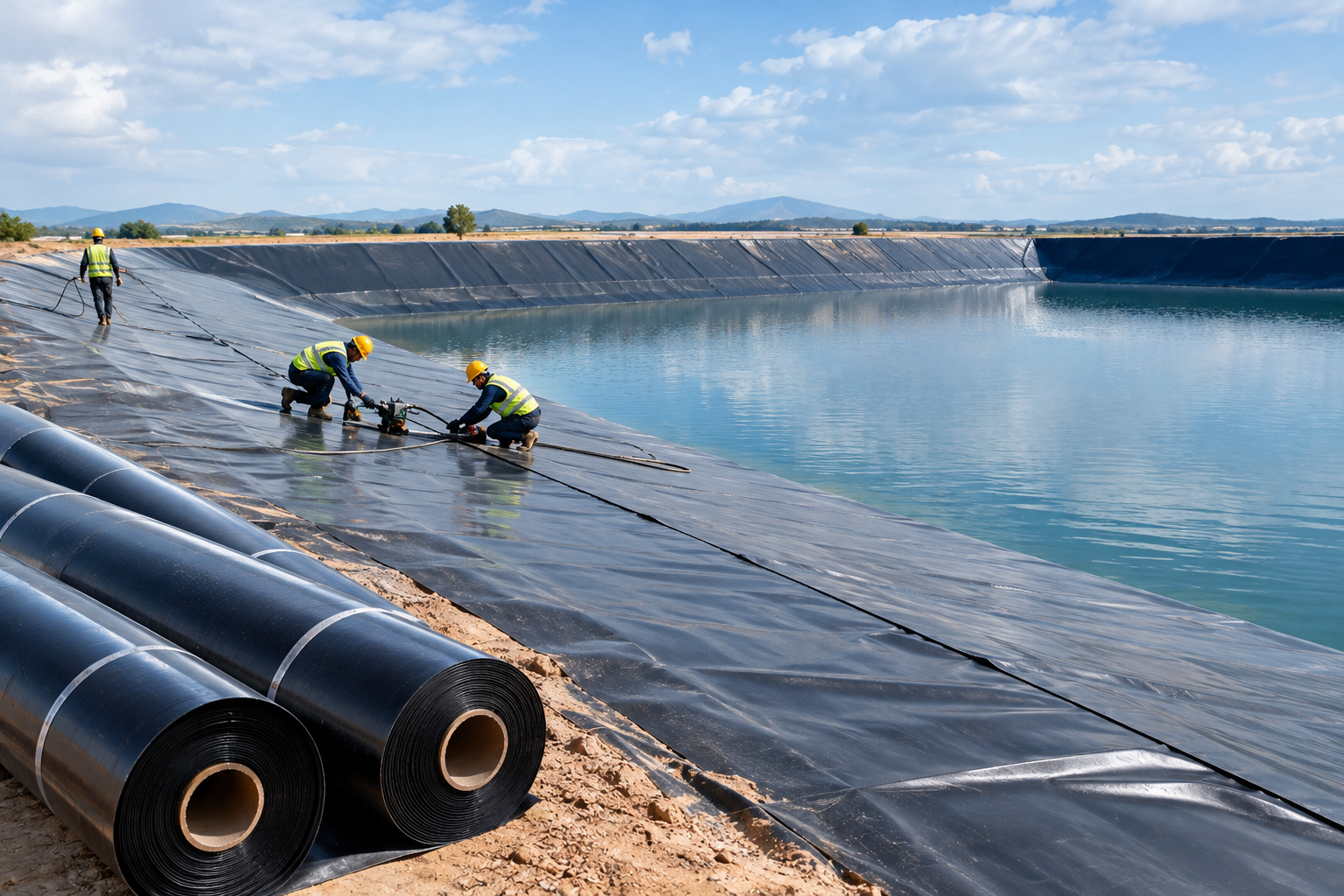
Geomembrane provides a low-permeability barrier for water storage, wastewater treatment, aquaculture and industrial containment. It helps control liquid movement and reduces seepage when the project team selects and installs the liner correctly.

Choosing the right geomembrane depends on material type, thickness, surface structure and site conditions. Therefore, buyers should confirm these specifications before placing a bulk order.

ZNY Agri supports product inquiries, specification discussions and bulk purchasing requirements for suitable projects.

// FREQUENTLY ASKED QUESTIONS

Questions Buyers Ask Before Ordering Geomembrane


What Type of Geomembrane Should You Source?
How do you choose the type of geomembrane?

How to Choose the Right Geomembrane

Different projects require different liner properties. Before choosing a product, consider these key factors.

Material Type

HDPE offers strong chemical resistance and mechanical performance for many containment applications. Meanwhile, LLDPE and other suitable polymers may offer greater flexibility. Always check material compatibility with the intended use.

Thickness and Dimensions

Thickness requirements depend on ground conditions, loading, puncture risks and installation methods. For example, a landfill project may require a different specification from an agricultural reservoir.

Surface Structure

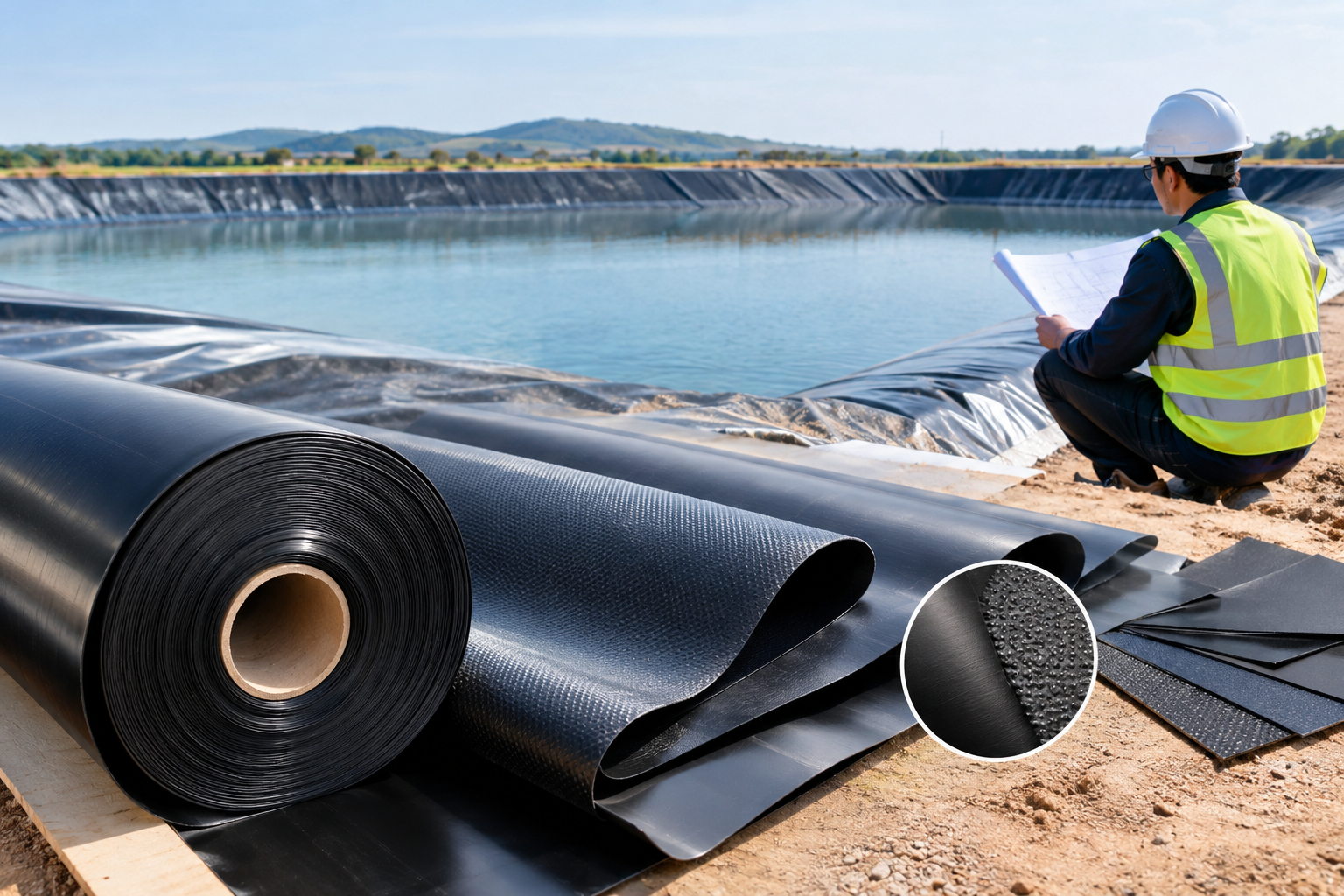
Smooth geomembrane suits many standard containment applications. In contrast, textured geomembrane provides greater interface friction and may improve stability on certain slopes.

Environmental Conditions

Sunlight, temperature, chemicals and ground movement can affect liner performance. Therefore, match the material and thickness to the project design and expected service conditions.

Manufacturing and Quality Control

Geomembrane Manufacturing and Quality Control

A consistent manufacturing process helps maintain product quality and dimensional accuracy.

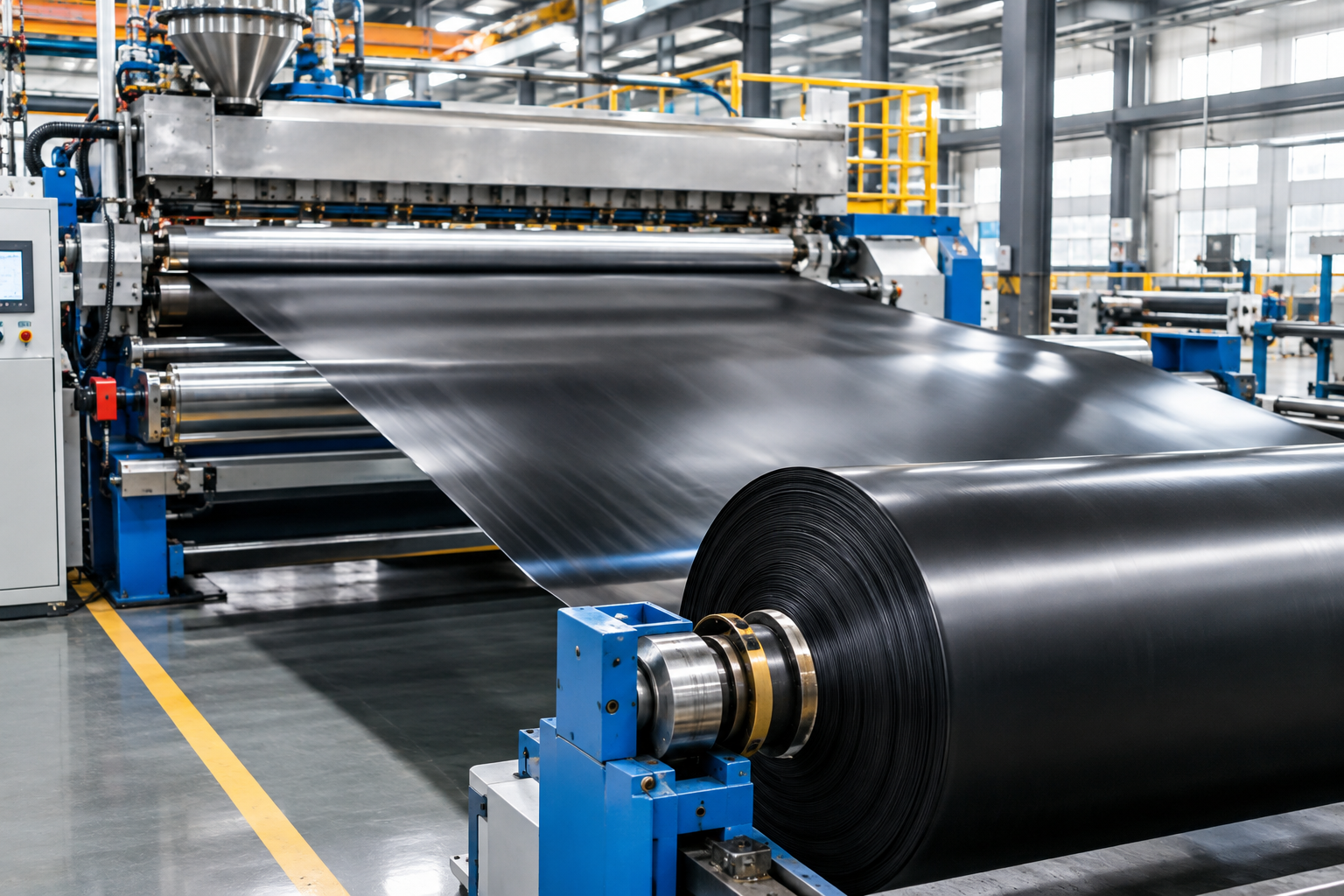
First, the production team selects suitable polymer resin and additives according to the required specifications. Next, the equipment forms the material into sheets with the target thickness and width.

During production, operators monitor processing conditions and sheet dimensions. For textured products, the production process also creates the required surface structure.

After forming, the team inspects the sheets for visible defects and dimensional consistency. In addition, quality checks may cover tensile properties, elongation, puncture resistance and other project-specific requirements.

Finally, the team winds and packages the rolls according to the agreed specifications. Buyers should confirm applicable test standards and inspection requirements before production.

APPLICATION SOLUTIONS

Geomembrane Solutions for Different Industries

Geomembranes support liquid containment in several industdesignries. However, each project requires the right material and installation 


Agricultural Water Reservoirs

Farmers use geomembrane liners to reduce seepage from irrigation reservoirs and water storage ponds. As a result, they can manage stored water more effectively.

Aquaculture Ponds

Fish and shrimp farms use geomembranes to create controlled pond liners. Proper ground preparation and reliable seam welding help reduce leakage risks.

Wastewater Treatment

Wastewater facilities use geomembranes to control liquid movement. Therefore, buyers should check chemical compatibility, operating temperature and project requirements before selecting a liner.

Landfill & Waste Containment

Landfill projects use geomembranes as part of engineered containment systems. In addition, engineers may combine them with drainage layers, protective geotextiles and other liner components.

Mining & Industrial Containment

Mining and industrial facilities may use geomembranes in process-water ponds, evaporation ponds and other containment structures. These applications require careful evaluation of chemical exposure, puncture resistance and seam performance.

BUYER FEEDBACK

What Project Buyers Value in Our Geomembrane Supply Process


The specification discussion focused on crop cycle, local temperature, weed pressure and laying method instead of treating all mulch films as interchangeable. The sample stage helped us compare opacity, thickness and roll quality before confirming the order.

Geomembrane
Agricultural Film Importer East African Market

We required clear, black and silver-black products in different widths for our distributor network. The OEM process helped us organize the range, confirm private-label packaging and reduce confusion between similar film specifications.

Geomembrane
Agricultural Materials Distributor European Market

The team explained where conventional PE film and biodegradable film should be evaluated differently. That guidance helped us select a more realistic specification for the crop cycle, climate and local end-of-season handling.

Geomembrane
Commercial Farming Project Buyer Middle East Market
COOPERATION PROCESS

From Geomembrane Requirements to Bulk Delivery


Share Your Requirements

Confirm Specifications

Review Product Options

Evaluate Samples

Confirm the Order

Arrange Delivery

Tell us your destination country, intended application, estimated project area and required quantity.

Discuss material type, thickness, dimensions, surface structure and testing requirements.

Our team evaluates suitable configurations based on your project conditions and purchasing needs

Where available, review samples against the agreed specifications before confirming the order.

Approve the product specifications, quantity, packaging and shipping arrangements.

After order confirmation, coordinate production or sourcing, agreed inspections and shipment.