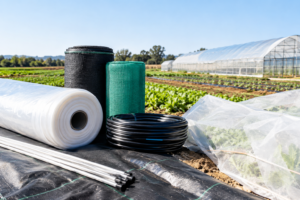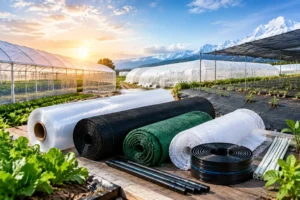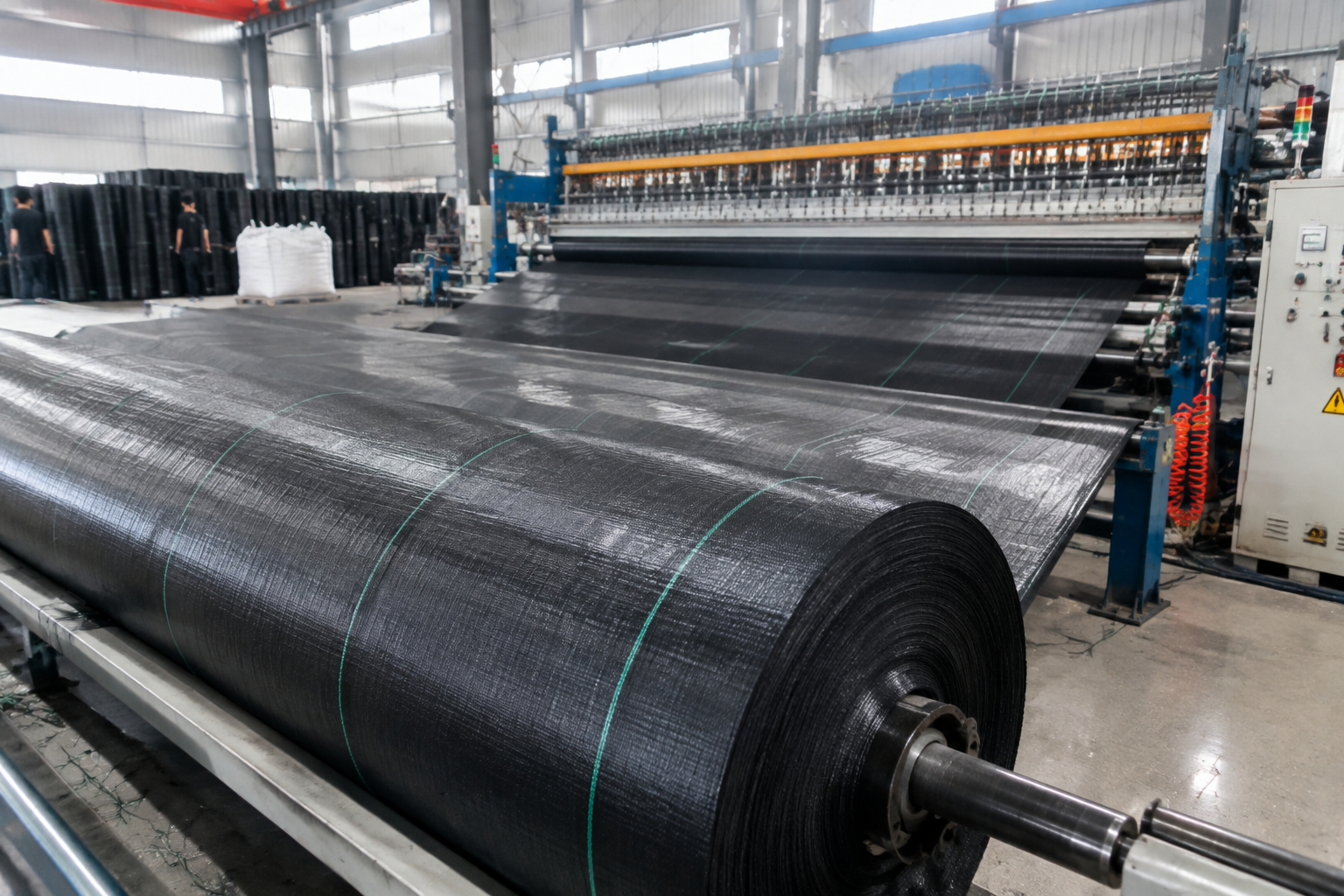
Weed management is one of the most time-consuming challenges in modern agriculture. As labor costs rise, growers need practical ways to reduce repetitive maintenance while maintaining consistent crop production.
Traditional weed control often depends on manual weeding, mechanical cultivation, or herbicides. However, these methods may require repeated labor throughout the growing season. Weed control fabric offers a physical alternative by covering exposed soil, reducing weed growth, and creating a cleaner, more manageable growing environment.
More importantly, the right weed control fabric can support not only weed suppression but also labor efficiency, irrigation management, and overall crop production.
Why Weed Control Matters to Modern Farmers
For large farms, orchards, nurseries, and greenhouse operations, repeated manual weeding can become a significant operating cost.
Therefore, effective weed management is not simply about removing weeds—it is about reducing unnecessary work and improving production efficiency.
How Weed Control Fabric Reduces Labor Costs
The principle is simple: weed control fabric creates a physical barrier over the soil surface, limiting the light available to many weeds and making it more difficult for them to establish.
1. Reduce Repetitive Weeding
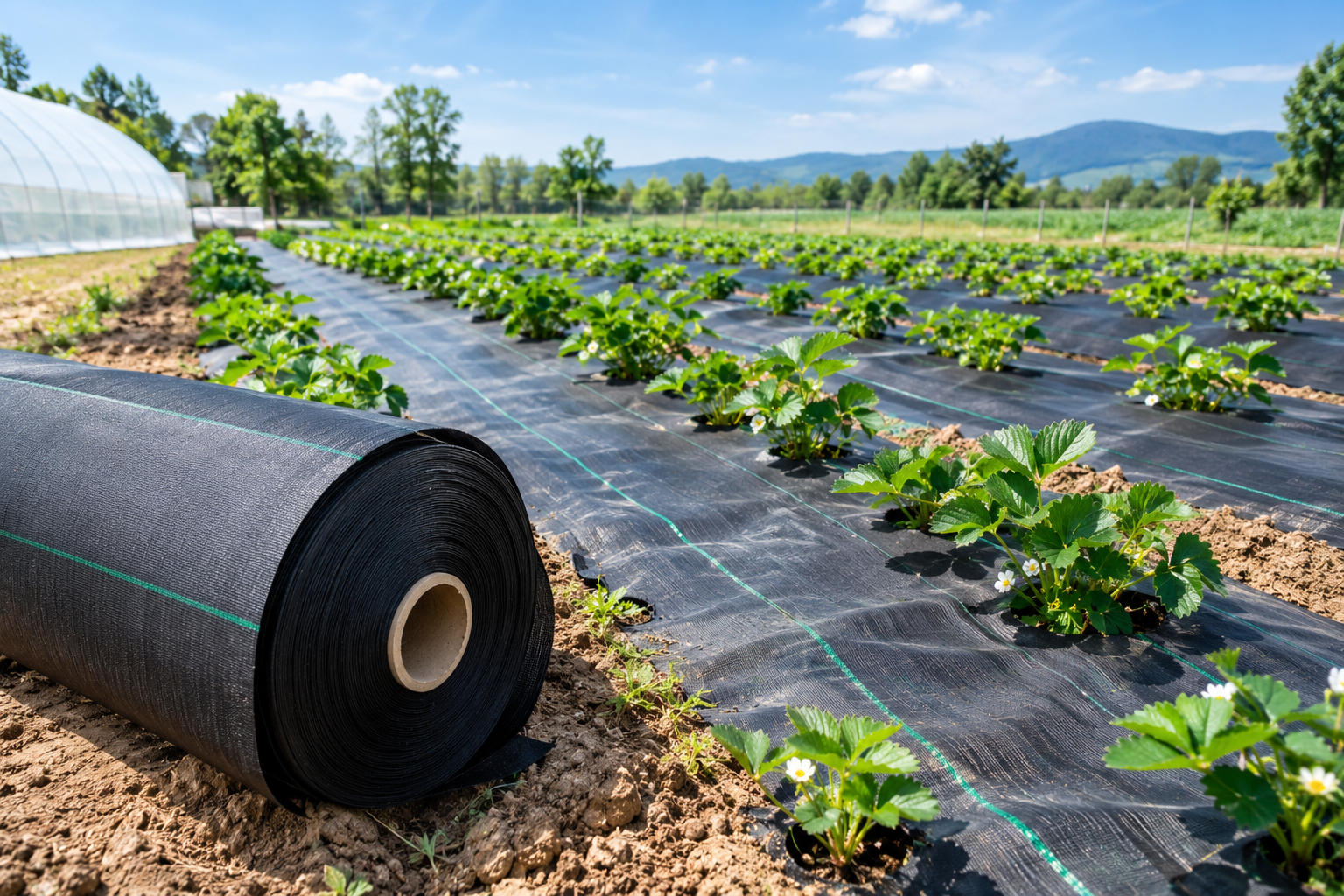
Once properly installed, agricultural ground cover can reduce weed growth around crops and between planting rows.
As a result, workers can spend less time on repetitive hand-weeding tasks and more time on higher-value activities, such as:
- Crop inspection
- Irrigation management
- Pruning
- Harvest preparation
- Plant maintenance
- Quality control
This allows farms to make better use of their available workforce.
2. Improve Field Management
In addition, reducing weed growth can make planting areas easier to access and maintain.
For this reason, weed control fabric is widely applicable to:
- Vegetable production
- Fruit orchards
- Vineyards
- Greenhouses
- Plant nurseries
- Horticultural projects
A cleaner growing area can also make routine inspection and harvesting more convenient.
How Weed Control Fabric Improves Crop Efficiency
Labor savings are only part of the benefit. Effective weed management can also support better use of water, nutrients, and growing space.
Better Water and Nutrient Management
Because weeds compete with crops for resources, reducing unwanted vegetation around the crop root zone can make water and nutrient management more focused.
For drip-irrigated crops, weed control fabric can also be integrated with a water-saving irrigation system. Irrigation lines can remain close to the crop root zone while the surrounding area receives additional weed suppression.
As a result, growers can combine ground cover and irrigation into a more organized production system.
Reduced Weed Competition
Furthermore, limiting weed growth reduces competition around cultivated plants.
This can help growers maintain a more controlled environment, particularly in high-density vegetable production, nurseries, and commercial horticultural operations.
However, weed control fabric should be considered part of an integrated crop-management strategy rather than a complete replacement for monitoring and other weed-control practices.
How to Choose the Right Weed Control Fabric
Not every agricultural ground cover is suitable for every application. Therefore, growers should consider several key factors before choosing a product.
Fabric Structure
Woven agricultural ground covers can provide different levels of strength, permeability, and durability.
Depending on the application, heavier or more tightly constructed fabrics may be suitable for areas with higher weed pressure or greater foot traffic.
Crop and Application
Different crops require different installation methods. Vegetable fields, orchards, nurseries, and greenhouse applications may have different requirements.
UV Resistance
Outdoor ground cover is continuously exposed to sunlight. Therefore, UV stabilization is an important factor when evaluating durability and expected service life.
Water Permeability
A suitable fabric should allow irrigation and rainfall to reach the soil effectively while maintaining weed suppression.
Size and Customization
Commercial projects may require customized:
- Width
- Length
- Weight
- Color
- Edge treatment
- Packaging
For large-scale agricultural projects, customized specifications can improve installation efficiency and product compatibility.
Our Weed Control Fabric Solution
Our customized solution can follow this process:
Crop & Site Assessment → Weed Pressure Analysis → Fabric Selection → Size Customization → Irrigation Integration → Installation Planning
Through this approach, growers can develop a ground-cover system that matches their actual production requirements.
Whether you need fabric for vegetable fields, orchards, nurseries, greenhouses, or horticultural applications, the goal is to create a practical and durable solution that helps reduce maintenance while supporting efficient crop production.
Build a More Efficient Agricultural Production System
Ultimately, weed management is connected to much more than weed removal. It affects labor efficiency, irrigation, crop maintenance, field organization, and production costs.
By combining the right weed control fabric with appropriate irrigation and crop-management practices, growers can reduce repetitive maintenance and create a more organized growing environment.
There is no universal “best” fabric. The right choice depends on crop type, weed pressure, climate, installation conditions, and expected service life.
Contact Us for a Customized Weed Control Fabric Solution
Looking for agricultural ground cover or customized weed control fabric?
Send us your crop type, application area, climate, installation requirements, and preferred specifications. We can help develop a solution tailored to your agricultural project.