Introduction
Agricultural Materials for Crop Protection play an important role in modern farming by helping growers protect crops from pests, extreme weather, weeds, and water shortages. For commercial farms, greenhouse projects, and agricultural distributors, choosing the right protection materials can improve crop quality, reduce production risks, and increase farming efficiency.
Unlike traditional crop protection methods that rely mainly on chemicals, agricultural protection materials create physical barriers and improve the growing environment. Products such as insect nets, greenhouse films, shade nets, mulch films, weed control fabric, and drip irrigation tapes provide complete solutions for different farming challenges.
This guide explains the main types of crop protection materials and how they help farmers achieve stable and efficient agricultural production.
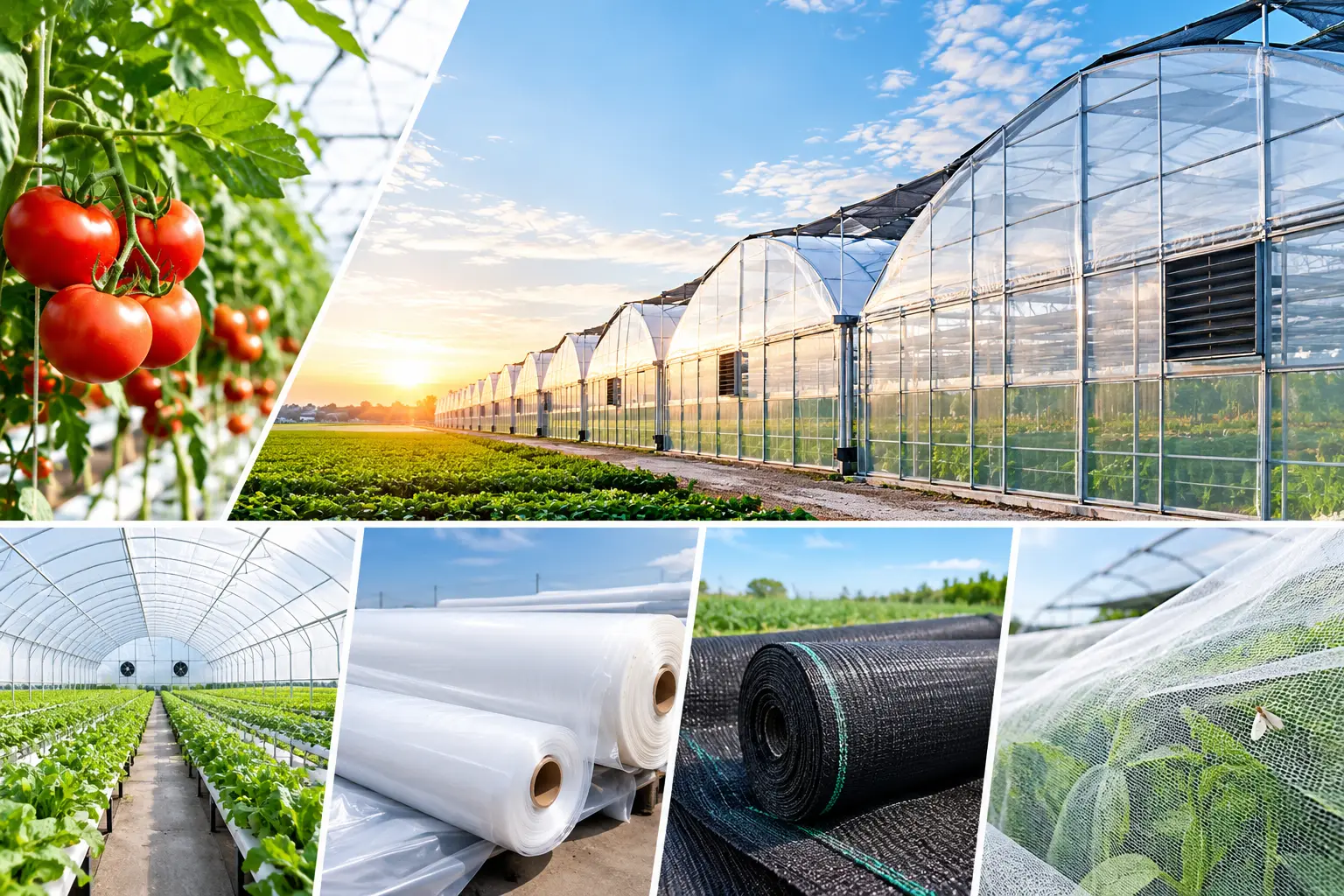
1. Insect Net: Effective Protection Against Crop Pests
Insect damage is one of the biggest threats to vegetable, fruit, and flower production. Small insects can reduce crop quality and affect market value, especially in greenhouse and high-value crop production.
Agricultural insect nets provide a physical protection barrier that prevents harmful insects from entering growing areas while allowing sunlight, air, and water to pass through.
Main Benefits of Insect Nets:
- Reduce pest damage and pesticide usage
- Protect crops during critical growth stages
- Improve crop appearance and quality
- Support sustainable farming practices
Different crops require different mesh sizes. Selecting the correct insect net depends on the target pests, crop type, and local climate conditions.
Image suggestion:
Greenhouse vegetable farm covered with insect net
Image Alt: Agricultural insect net for crop protection in greenhouse farming
Internal link: Insect Net Product Page
2. Greenhouse Film: Creating a Controlled Growing Environment
High-quality greenhouse film helps farmers create a stable environment by controlling temperature, humidity, and light transmission.
Advantages of Greenhouse Film:
- Protect crops from harsh weather
- Extend planting seasons
- Improve greenhouse temperature management
- Increase production stability
Different agricultural projects may require different film features, including:
- UV resistance
- Anti-drip performance
- Thermal insulation
- Light diffusion technology
For commercial greenhouse growers, selecting durable greenhouse film can improve long-term farming performance.
Image suggestion:
Modern greenhouse with vegetables growing under greenhouse film
Image Alt: Greenhouse film solution for commercial crop protection
Internal link: Greenhouse Film Solutions
3. Shade Net: Managing Heat and Sunlight
Shade nets help control solar radiation by reducing direct sunlight exposure and maintaining a more suitable growing environment.
Common Applications:
- Vegetable cultivation
- Nursery plants
- Flower production
- Fruit tree protection
The shade percentage should be selected according to crop requirements:
| Crop Type | Recommended Shade Rate |
|---|---|
| Leaf vegetables | 30%-50% |
| Seedlings | 50%-70% |
| Flowers | 50%-75% |
Choosing the correct shade net improves crop growth while reducing heat stress.
Image Alt: Agricultural shade net protecting crops from sunlight
Internal link: Shade Net Product Page
4. Agricultural Mulch Film: Improving Soil Conditions
Soil quality and moisture management directly influence crop yield. Agricultural mulch film is widely used to protect soil and create better growing conditions.
Benefits of Mulch Film:
- Reduce soil moisture evaporation
- Maintain soil temperature
- Control weed growth
- Improve fertilizer efficiency
Different regions may require different mulch film types. For example, black mulch film is commonly used for weed control, while transparent mulch film helps increase soil temperature.
Mulch film is widely used in vegetable farming, fruit production, and large-scale agricultural projects.
Image Alt: Agricultural mulch film used in vegetable farming
Internal link: Agricultural Mulch Film
5. Weed Control Fabric: Reducing Farming Labor Costs
Weeds compete with crops for water and nutrients, affecting plant growth and increasing labor costs.
Weed control fabric provides a long-lasting solution by blocking weed growth while allowing water and air to reach the soil.
Advantages:
- Reduce manual weeding work
- Keep planting areas clean
- Improve farm management efficiency
- Provide long-term soil protection
It is commonly used in orchards, greenhouses, nurseries, and landscaping projects.
Image Alt: Weed control fabric application in agricultural fields
Internal link: Weed Control Fabric
6. Drip Irrigation Tape: Improving Water Efficiency
Water management has become increasingly important in modern agriculture, especially in dry regions.
Drip irrigation tape delivers water directly to plant roots, reducing water waste and improving irrigation efficiency.
Key Benefits:
- Save water resources
- Provide uniform irrigation
- Improve fertilizer application
- Support large-scale farming
Drip irrigation systems are widely used for vegetables, fruits, greenhouse crops, and commercial farms.
Combining drip irrigation tape with other agricultural protection materials creates a complete farming solution.
Image Alt: Drip irrigation tape system for precision agriculture
Internal link: Drip Irrigation Tape
How to Choose the Right Agricultural Protection Materials?
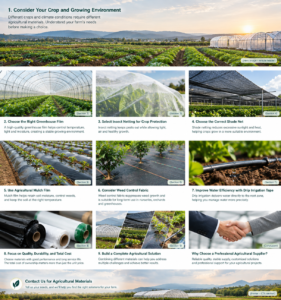
Choosing suitable agricultural materials depends on four important factors:
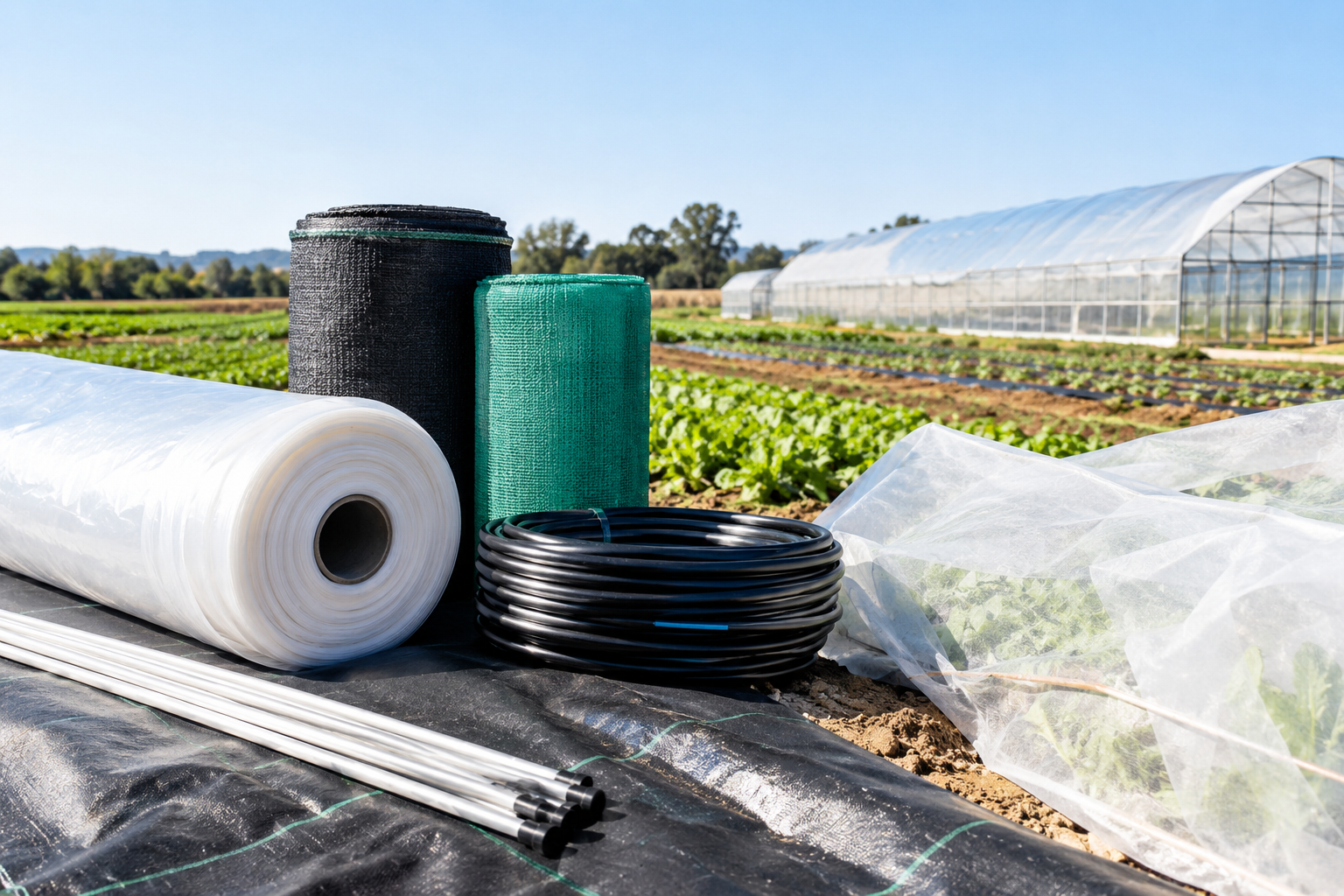
1. Climate Conditions
Farmers should select materials based on local weather challenges.
Examples:
- Hot areas → Shade nets and greenhouse films
- Pest-prone areas → Insect nets
- Dry regions → Drip irrigation systems
2. Crop Requirements
Different crops have different needs for sunlight, temperature, moisture, and protection levels.
3. Farming Scale
Large farms usually require durable materials with stable performance and long service life.
4. Product Quality
Important factors include:
- UV resistance
- Material strength
- Weather durability
- Service life
- Manufacturer reliability
Conclusion
Agricultural Materials for Crop Protection provide effective solutions for modern farming challenges. From pest prevention and climate control to soil protection and water management, these materials help farmers improve productivity and reduce operational risks.
For agricultural distributors, greenhouse growers, and commercial farming projects, selecting reliable crop protection materials is essential for achieving stable crop production.
By combining insect nets, greenhouse films, shade nets, mulch films, weed control fabric, and drip irrigation systems, farmers can build a complete agricultural protection solution for long-term success.