However, agricultural materials are not one-size-fits-all. Different crops, climates, soil conditions, and farming systems require different solutions. Before purchasing, farmers and agricultural buyers should consider the application, product specifications, durability, and overall cost.
This guide explains how to choose the right agricultural materials for your farm and how different products can work together as a complete crop production solution.
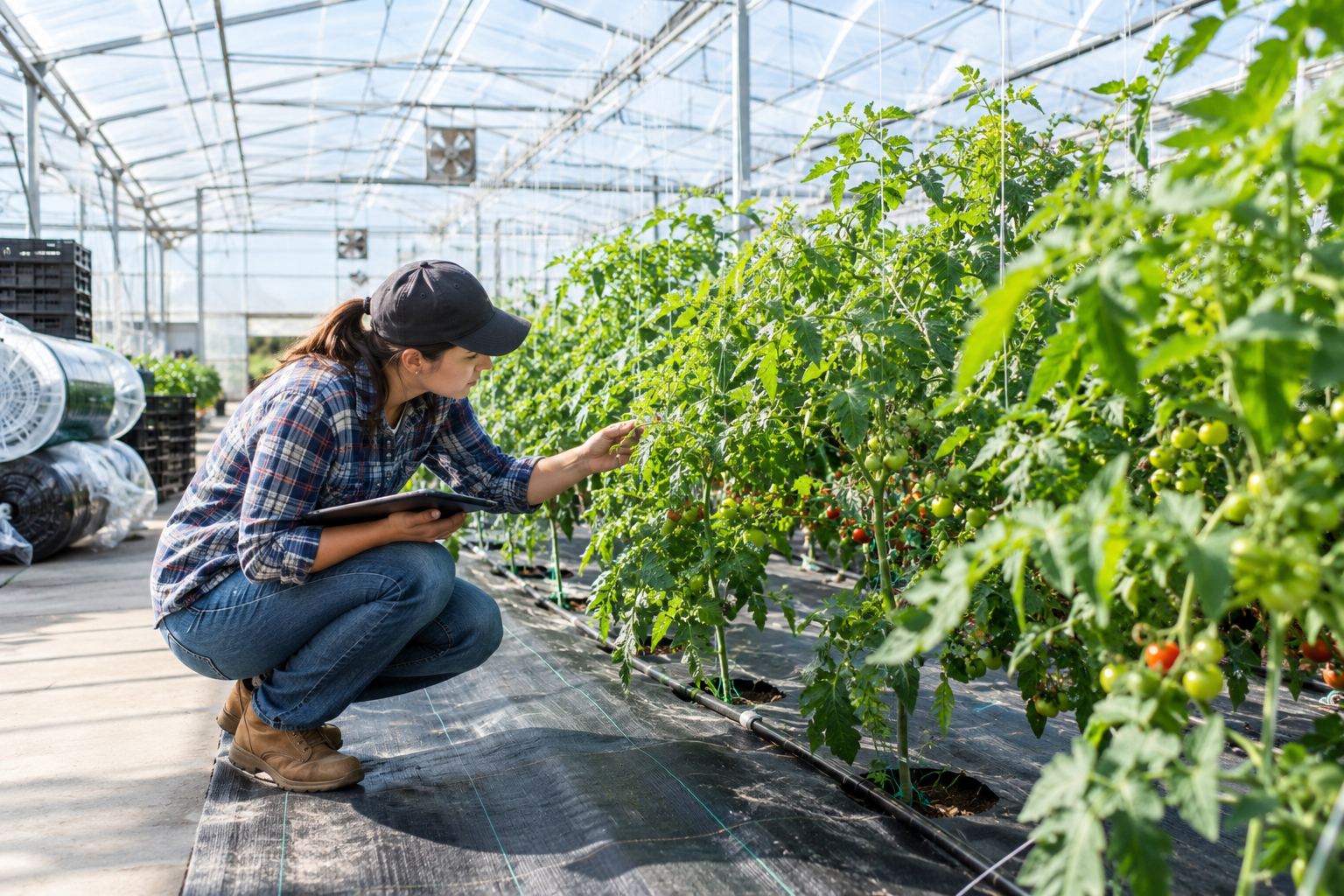
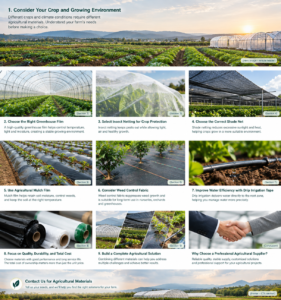
1. Consider Your Crop and Growing Environment
The first step is to understand your crop and local growing conditions.
Vegetables, fruits, flowers, nurseries, and field crops have different requirements. Temperature, sunlight, rainfall, wind, humidity, pests, and soil conditions can all affect crop growth.
For example, crops grown in areas with strong sunlight may require shade protection, while farms located in regions with high pest pressure may need insect netting. Areas with limited water resources may benefit from drip irrigation systems and moisture-retaining mulch film.
Before selecting agricultural materials, consider:
- Crop type and growth cycle
- Local climate
- Sunlight intensity
- Rainfall and humidity
- Pest pressure
- Soil conditions
- Irrigation requirements
- Expected service life
Understanding these factors makes it easier to select suitable agricultural products.
2. Choose the Right Greenhouse Film
A suitable greenhouse film can help manage light, temperature, moisture, and weather exposure. When selecting greenhouse film, buyers should consider thickness, width, UV resistance, light transmission, durability, and climate conditions.
For commercial greenhouse projects, the film should also be compatible with the greenhouse structure and installation method.
A high-quality greenhouse film can provide stable protection throughout the growing season and help farmers maintain more consistent growing conditions.
3. Select Insect Netting for Crop Protection
Insects can cause significant damage to vegetables, fruits, seedlings, and other crops. Insect netting provides a physical barrier that helps reduce insect access while maintaining airflow and light transmission.
When choosing an insect net, pay attention to:
- Mesh size
- Material
- UV resistance
- Width and length
- Air permeability
- Expected service life
The correct mesh size should match the main pests that need to be controlled. For greenhouse and nursery production, insect netting can be combined with greenhouse film and other protective materials to create a more controlled growing environment.
4. Choose the Correct Shade Net
Excessive sunlight and high temperatures can affect crop growth, especially in hot climates.
Shade netting can help reduce solar radiation and protect plants from excessive heat. Different shade percentages are available for different crops and applications.
For example, crops with higher light requirements may need a lower shade percentage, while sensitive plants may require stronger shading.
When selecting shade netting, consider the crop’s light requirements, local temperature, climate, and growing season.
The goal is not simply to block sunlight, but to create a more suitable environment for healthy crop growth.
5. Use Agricultural Mulch Film to Improve Field Management
Agricultural mulch film is widely used in vegetable, fruit, and field crop production.
It can help reduce soil moisture loss, control weed growth, regulate soil temperature, and keep crops cleaner during production.
Black mulch film is commonly used for weed control, while other colors and specifications can be selected for different applications.
When purchasing plastic mulch film, check:
- Film thickness
- Width
- Color
- Material
- UV resistance
- Roll length
- Packaging requirements
For large farms, customized specifications can help improve installation efficiency and reduce material waste.
6. Consider Weed Control Fabric for Long-Term Applications
Unlike short-cycle plastic mulch film, weed control fabric can be designed for longer-term use. It helps suppress weed growth while allowing water and air to reach the soil.
For nurseries and orchards, selecting a durable fabric with suitable UV resistance can reduce repeated replacement and lower long-term maintenance requirements.
7. Improve Water Efficiency with Drip Irrigation Tape
Water management is becoming increasingly important for modern agriculture.
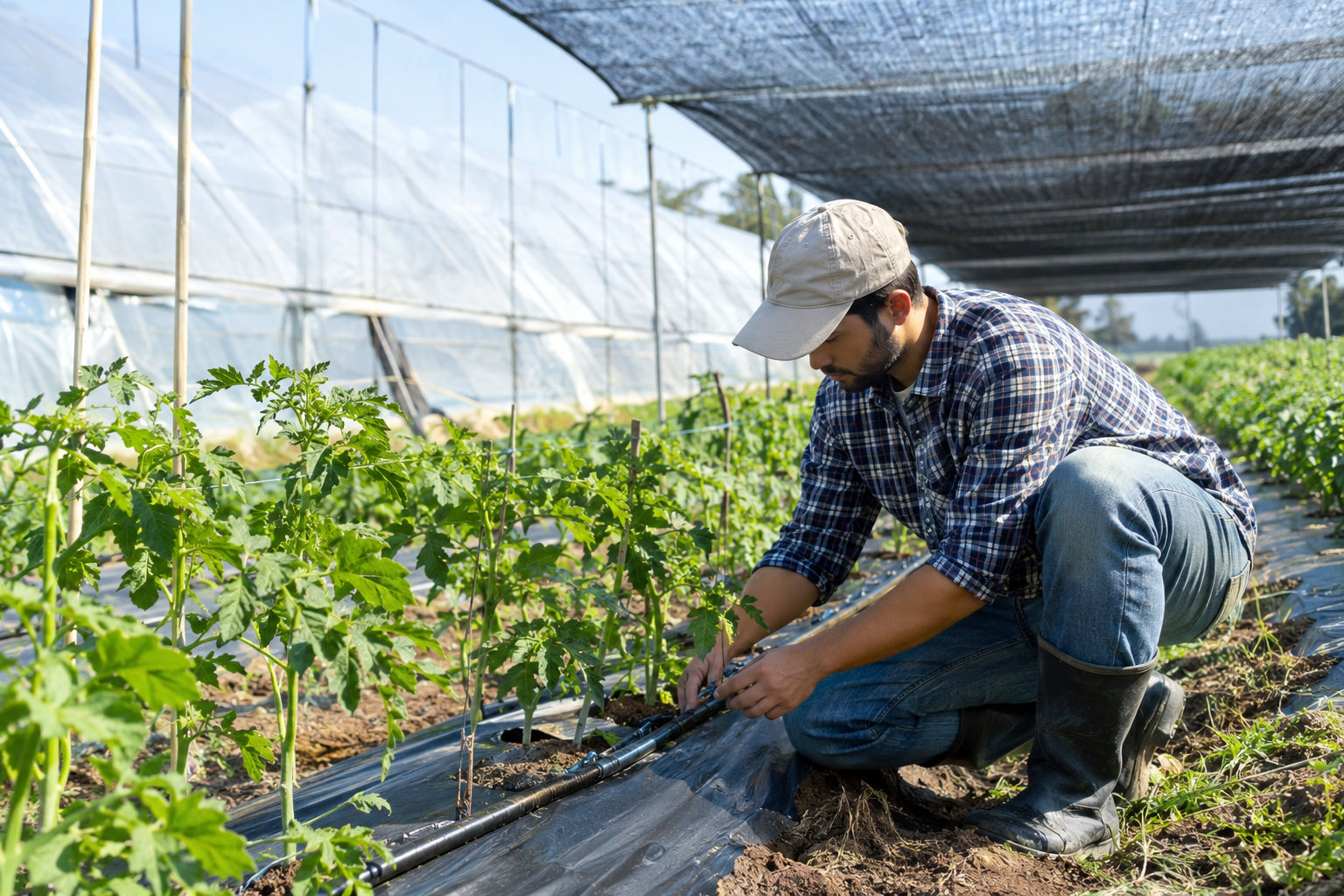
Drip irrigation tape delivers water directly to the crop root zone, helping farmers manage irrigation more precisely. When combined with agricultural mulch film, it can provide a more efficient solution for moisture management.
When choosing drip irrigation tape, consider:
- Dripper spacing
- Flow rate
- Wall thickness
- Working pressure
- Irrigation area
- Water quality
- Crop spacing
For commercial farms, irrigation products should be selected according to the complete irrigation system rather than as individual components.
8. Focus on Quality, Durability, and Total Cost
The lowest purchase price does not always mean the lowest farming cost.
Agricultural materials should be evaluated based on durability, performance, installation efficiency, replacement frequency, and overall service life.
For example, a product with better UV resistance may have a higher initial cost but provide longer outdoor performance. A suitable specification can also reduce waste and installation problems.
For B2B buyers, it is important to evaluate the total cost of ownership rather than focusing only on the unit price.
9. Build a Complete Agricultural Solution
A commercial vegetable farm may use:
Greenhouse Film + Insect Net + Shade Net + Mulch Film + Drip Irrigation Tape
An orchard may require:
Weed Control Fabric + Drip Irrigation + Insect Protection
A nursery may combine:
Shade Net + Insect Net + Ground Cover + Irrigation System
This approach allows farmers to address multiple production challenges at the same time and create a more efficient crop management system.
For large-scale farms, distributors, importers, and agricultural projects, choosing the right supplier is just as important as choosing the right product.
A professional supplier should be able to provide stable product quality, clear specifications, reliable packaging, quality control, and customized solutions according to project requirements.
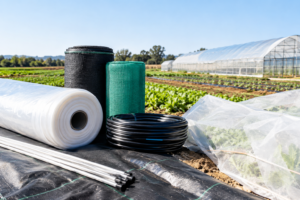
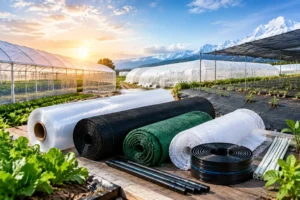
We supply a range of agricultural protection materials, including Greenhouse Film, Insect Net, Shade Net, Agricultural Mulch Film, Weed Control Fabric, Drip Irrigation Tape, and Fiberglass Rods.
Our goal is to provide practical agricultural products and solutions for different farming environments and commercial applications.
Contact Us for Agricultural Materials
Choosing the right agricultural materials starts with understanding your crops, climate, application, and project requirements.
If you are sourcing agricultural materials for a farm, distribution business, greenhouse project, or commercial agricultural operation, our team can help you select suitable products and specifications.