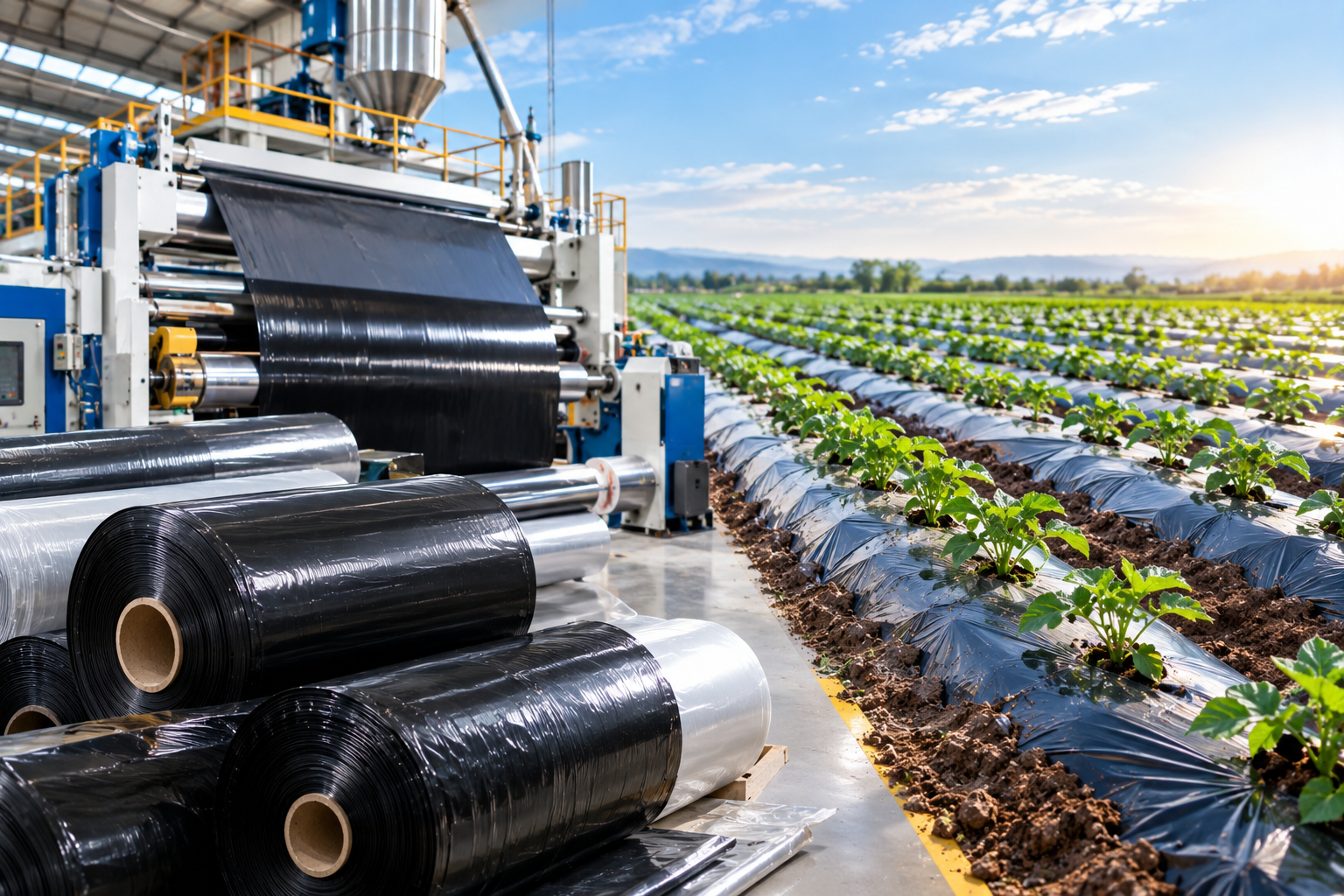
Agricultural mulch film is widely used in modern farming to improve growing conditions, protect crops, and increase production efficiency. By covering the soil around crops, agricultural mulch film helps farmers manage soil temperature, moisture, weeds, and soil conditions throughout the growing season.
For commercial farms and agricultural projects, choosing the right plastic mulch film can be an effective solution for achieving more stable crop growth and improving overall yield.
What Is Agricultural Mulch Film?
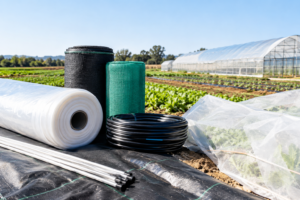
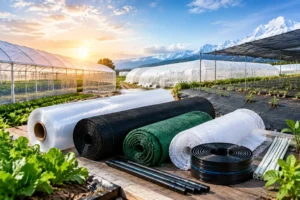
Depending on crop requirements and growing conditions, farmers can choose different types of mulch film, including:
- Black plastic mulch film
- Transparent mulch film
- White or reflective mulch film
- Biodegradable mulch film
- UV-resistant agricultural film
Different colors, thicknesses, widths, and UV resistance levels can be selected according to climate, crop type, planting method, and field conditions.
1. Maintains Soil Moisture
Water loss from soil can significantly affect crop growth, especially in areas with high temperatures or limited rainfall.
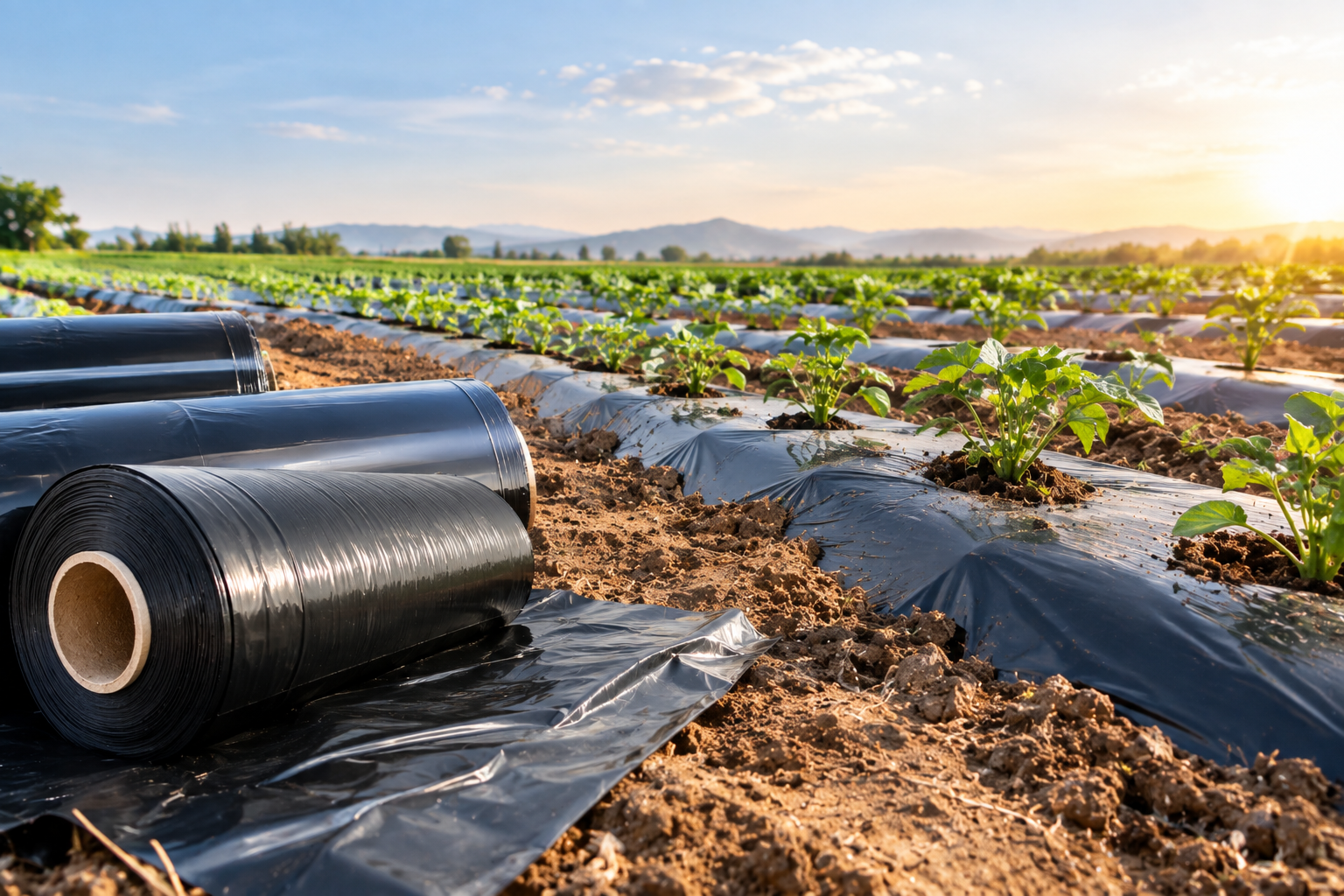
Agricultural mulch film helps reduce direct evaporation from the soil surface. This allows moisture to remain available around the crop root zone for a longer period.
For farms using irrigation systems, mulch film can also work together with drip irrigation tape to improve water-use efficiency.
2. Controls Weed Growth
Weeds compete with crops for water, nutrients, sunlight, and growing space.
Black agricultural mulch film blocks sunlight from reaching the soil surface, making it more difficult for many weeds to grow. This can reduce the need for frequent manual weeding and help farmers maintain cleaner planting areas.
For commercial vegetable production, fruit cultivation, and large-scale agricultural projects, this can reduce labor requirements and improve field management efficiency.
3. Improves Soil Temperature
Soil temperature directly affects seed germination and root development.
Mulch film can help regulate the temperature of the soil around the crop. Depending on the type and color of film used, it can either retain heat or reflect excessive solar radiation.
This makes agricultural mulch film particularly useful for crops grown during cooler periods or in regions with strong temperature fluctuations.
4. Protects Crops and Soil
Heavy rain, wind, and other environmental conditions can affect soil structure and crop growth.
Mulch film provides a protective layer over the soil surface, helping reduce soil erosion and preventing soil from splashing onto crops during rainfall.
A cleaner growing environment can also make crop management and harvesting easier.
Agricultural Mulch Film as a Complete Crop Protection Solution
For example, a commercial vegetable farm may combine:
Agricultural Mulch Film + Drip Irrigation Tape + Insect Netting + Greenhouse Film + Shade Cloth
Each product addresses a different farming challenge.
| Farming Challenge | Agricultural Solution |
|---|---|
| Soil moisture loss | Agricultural Mulch Film |
| Weed growth | Black Plastic Mulch Film |
| Water management | Drip Irrigation Tape |
| Insect damage | Agricultural Insect Netting |
| Excessive sunlight | Shade Cloth |
| Temperature and weather protection | Greenhouse Film |
This integrated approach helps farmers create a more controlled growing environment and improve production efficiency.
Choosing the Right Agricultural Mulch Film
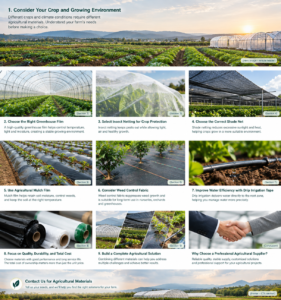
The correct mulch film should be selected according to the crop, climate, soil conditions, and farming method.
Important factors include:
- Film thickness: Determines durability and application performance.
- Film width: Should match the planting bed and installation method.
- Color: Different colors provide different effects on light and soil temperature.
- UV resistance: Important for outdoor applications and long growing cycles.
- Material: PE and other plastic materials can be selected according to application requirements.
- Packaging: Roll size and packaging should be suitable for transportation, storage, and field installation.
For large agricultural projects, customized specifications can also help buyers match their specific planting requirements.
Why Choose Our Agricultural Products?
We are a professional agricultural products manufacturer and global supplier with extensive experience in agricultural protection materials.
Our product range includes:
- Agricultural Mulch Film
- Greenhouse Film
- Shade Cloth
- Insect Netting
- Weed Control Fabric
- Drip Irrigation Tape
- Fiberglass Rod
We focus on supplying practical agricultural solutions for distributors, importers, commercial farms, greenhouse projects, and agricultural businesses.
From product specifications and packaging to production and pre-shipment quality control, we work with buyers to provide stable products for long-term agricultural applications.
Contact Us for Agricultural Mulch Film
Looking for reliable agricultural mulch film for your farm, distribution business, or agricultural project?
We can provide different specifications based on your requirements, including film width, thickness, color, packaging, and order quantity.
Whether you are sourcing plastic mulch film for vegetable production, fruit cultivation, greenhouse farming, or large-scale agricultural projects, we are ready to provide suitable agricultural protection solutions.
Contact us today for agricultural mulch film and complete crop protection solutions.