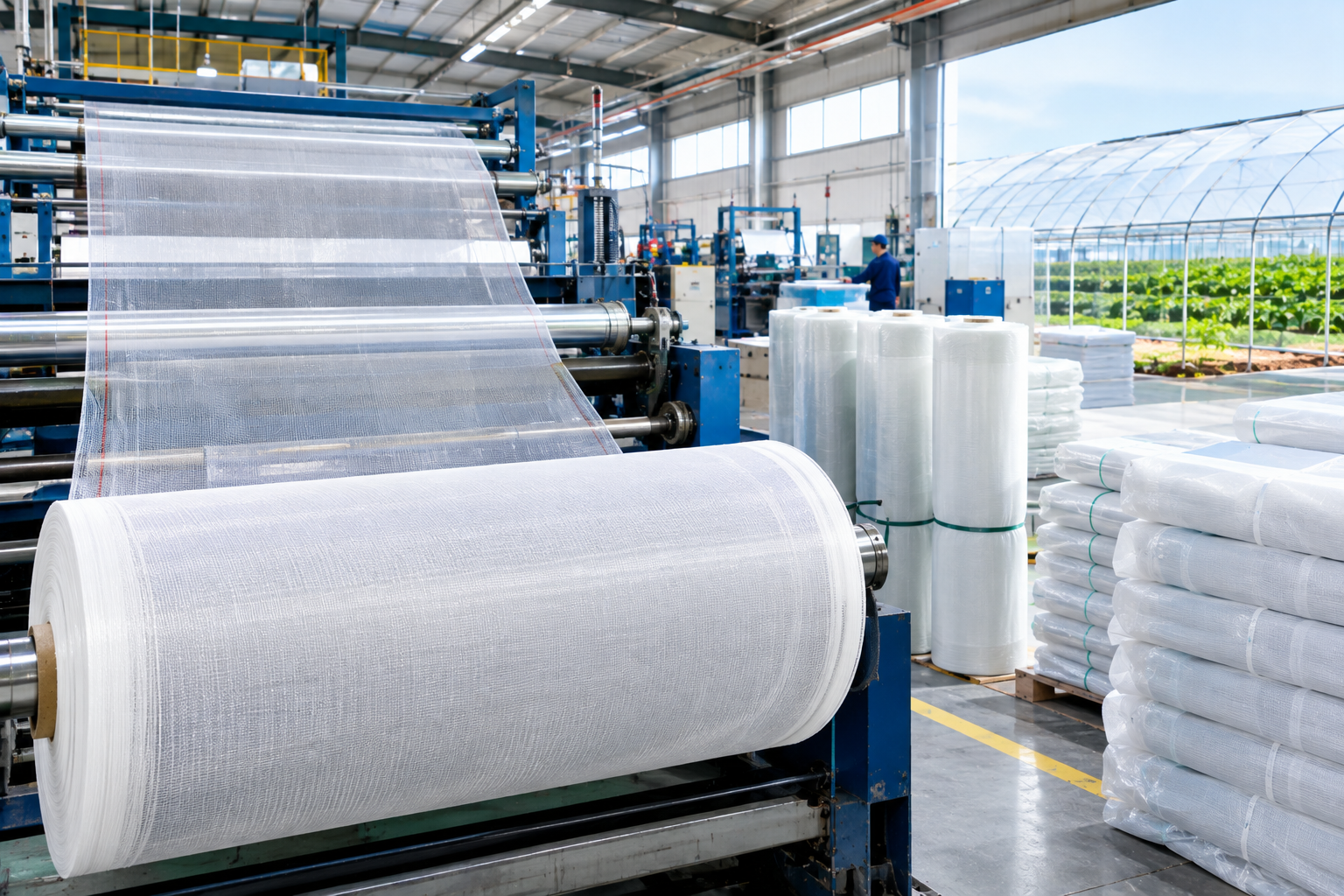
Choosing an insect net for greenhouse production is not simply a matter of selecting the highest mesh count. The right net must create a reliable barrier against target pests while maintaining the airflow, temperature, humidity, and growing conditions that crops need.
For commercial growers, greenhouse operators, nurseries, and agricultural distributors, the real question is:
How can you balance pest exclusion, ventilation, durability, and crop performance in one insect net solution?
This guide explains the key factors to consider before choosing greenhouse insect nett
1. Start With the Pest, Not the Mesh Number
Different insects require different levels of protection. Aphids, whiteflies, thrips, leafminers, and larger flying insects vary significantly in size, so a single mesh specification cannot provide the same level of protection for every crop and growing environment.
As a general starting point:
| Target Pest | Typical Consideration | Key Requirement |
|---|---|---|
| Larger insects & moths | Coarser mesh | Prioritize airflow |
| Leafminers | Medium mesh | Balanced protection |
| Aphids | Fine mesh | Reliable physical exclusion |
| Whiteflies | Finer mesh | Strong crop protection |
| Thrips | Very fine mesh | Maximum exclusion + ventilation planning |
However, mesh count alone can be misleading. Different yarn thicknesses and weaving structures can produce different actual openings even when products have the same nominal mesh count. Checking the actual aperture size is therefore important when comparing suppliers.
2. Smaller Mesh Does Not Always Mean Better
A common mistake is assuming that finer insect netting automatically provides a better solution.
A smaller opening can exclude smaller insects, but it also creates greater resistance to airflow. In a naturally ventilated greenhouse, excessive airflow restriction may contribute to higher temperature and humidity.
This creates a practical balance:
Pest Protection ↔ Mesh Opening ↔ Airflow ↔ Greenhouse Climate
For example, a greenhouse growing tomatoes in a high-whitefly environment may require finer screening than a structure primarily designed to prevent larger moths. The final specification should also consider the local climate and ventilation system.
3. Choose Insect Netting According to the Crop
The crop itself should influence your decision.
Tomatoes & Peppers
Tomatoes and peppers can face significant pressure from whiteflies, aphids, and thrips. In these systems, insect netting can form part of an integrated crop-protection strategy, particularly around greenhouse vents and openings.
Cucumbers
Cucumber production requires effective pest protection while maintaining sufficient airflow because excessive heat and humidity can create additional growing challenges.
Nursery & Seedling Production
Young plants are particularly valuable during the early growth stage. Fine insect netting can be used around nursery structures, seedbeds, and ventilation openings to reduce pest entry.
Leafy Vegetables
For leafy crops, growers may prioritize a combination of physical pest exclusion, ventilation, light transmission, and easy installation.
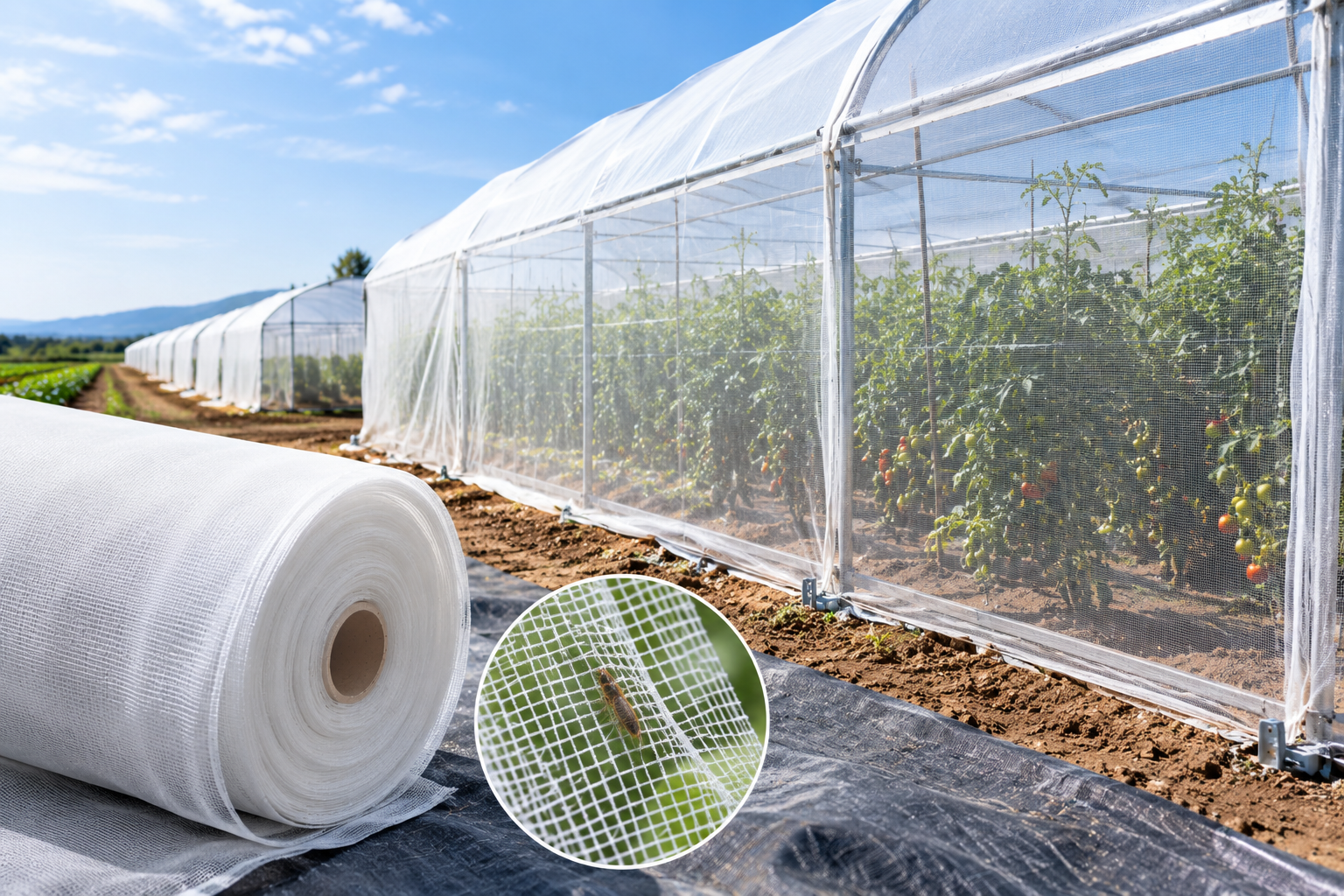
4. Our Insect Net Solution
Instead of treating insect netting as a single product, a more effective approach is to build a crop-specific insect protection solution.
Our solution can be configured around:
1. Pest Identification
Identify the primary insects affecting the crop and production area.
2. Mesh Selection
Match the actual aperture and mesh structure to the target pest.
3. Ventilation Assessment
Evaluate greenhouse vents, side openings, doors, fans, and overall airflow requirements.
4. Material Selection
For outdoor agricultural applications, UV-stabilized HDPE is commonly used for durable insect netting.
5. Customized Dimensions
Width, length, mesh specification, weight, and other parameters can be customized according to the greenhouse or crop-protection project.
6. Installation & Sealing
Even high-quality insect netting can perform poorly if there are gaps around doors, vents, edges, or structural connections.
The goal is not simply to install the finest mesh available. It is to create a complete protection system that matches the crop, pest pressure, climate, and greenhouse structure.
5. What Makes a Professional Insect Net Different?
For long-term agricultural use, buyers should look beyond mesh size and consider:
- Actual aperture size
- Material quality
- UV resistance
- Tensile strength
- Air permeability
- Light transmission
- Mesh uniformity
- Roll width and customized dimensions
- Expected outdoor service life
For commercial projects, these factors can have a direct impact on installation efficiency and long-term operating costs.
6. Build a Crop Protection Strategy, Not Just a Net
The most effective insect-net system should work as part of an integrated crop protection program.
Insect Monitoring → Pest Identification → Mesh Selection → Greenhouse Screening → Ventilation Management → Regular Inspection
Insect netting can reduce pest entry, but it should not be viewed as a complete replacement for monitoring and other integrated pest-management practices.
Find the Right Insect Net for Your Project
There is no universal “best insect net.” The right specification depends on your target pests, crop, climate, greenhouse structure, ventilation requirements, and installation conditions.
Whether you need insect netting for greenhouses, nurseries, low tunnels, orchards, or open-field crop protection, a customized solution can help you achieve the right balance between protection and growing conditions.
Looking for a customized insect net solution?