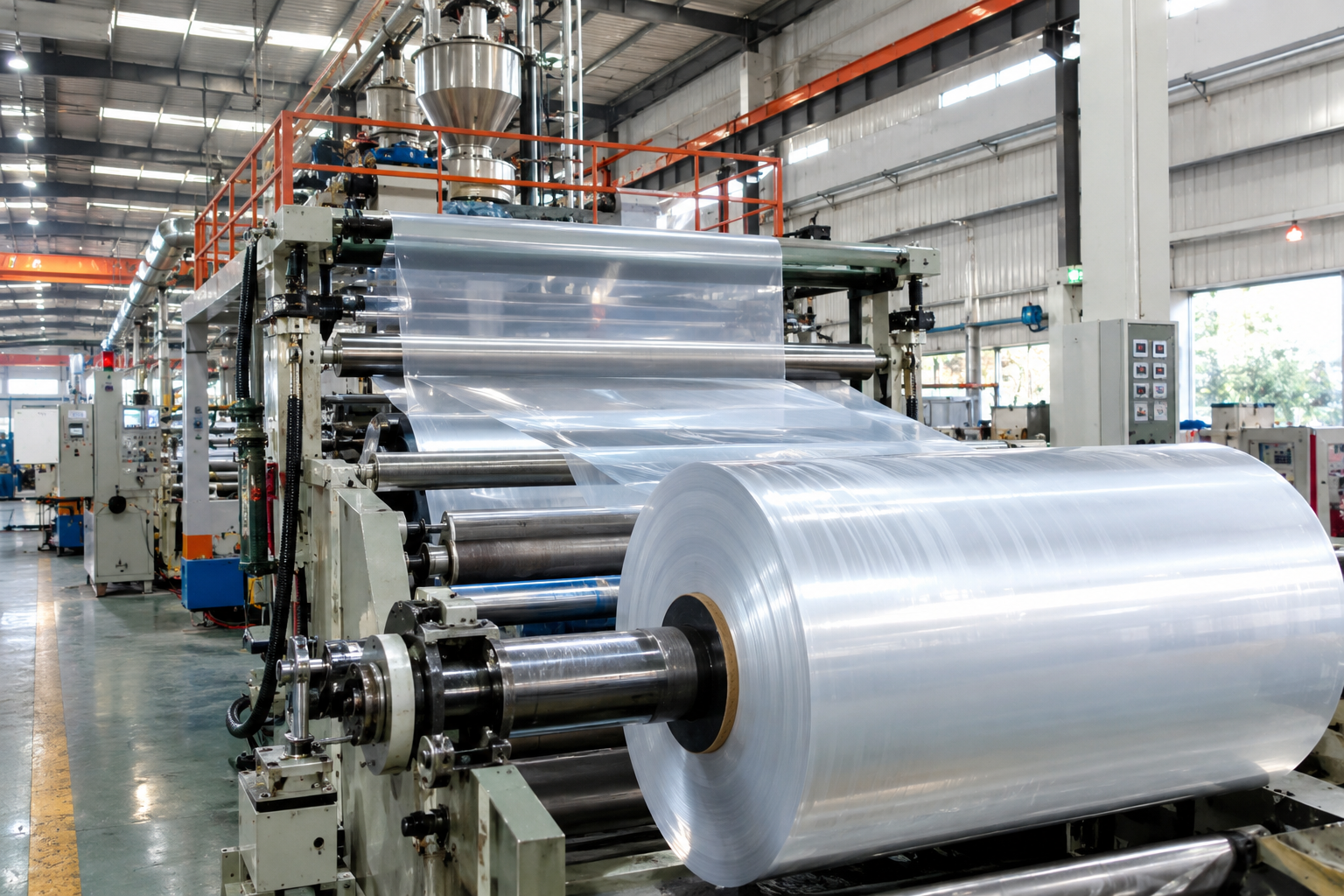
Commercial farming requires a stable growing environment to achieve consistent crop quality and higher productivity. However, outdoor growing conditions can change quickly, with strong sunlight, heavy rain, wind, low temperatures, and pests affecting crop growth.
As a result, commercial growers increasingly rely on protected agriculture systems to reduce the impact of unpredictable weather. Greenhouse film provides a practical way to protect crops while creating a more controlled growing environment.
More importantly, high-quality greenhouse film can help regulate light, temperature, humidity, and crop protection. For this reason, it has become an important material for modern commercial farming.
What Is Greenhouse Film?
Greenhouse film is a flexible plastic covering material designed specifically for agricultural greenhouses and protected growing structures.
Unlike ordinary plastic sheets, agricultural greenhouse film is manufactured with properties intended for long-term outdoor agricultural use. Depending on the product specification, greenhouse film can provide UV resistance, light transmission, thermal insulation, anti-drip performance, and improved durability.
Therefore, selecting the appropriate greenhouse film is not simply a matter of covering the greenhouse. Instead, the film should match the crop, climate, greenhouse structure, and production objectives.
How Greenhouse Film Improves the Growing Environment
1. Better Temperature Control
Temperature is one of the most important factors in commercial crop production.
During the day, sunlight passes through the greenhouse film and helps increase the internal temperature. Meanwhile, certain greenhouse film technologies can help retain heat during colder periods.
As a result, growers can create a more stable environment for vegetables, flowers, seedlings, and other commercial crops.
In particular, temperature management becomes even more important in regions where outdoor temperatures fluctuate significantly between day and night.
2. Controlled Light Transmission
Plants require sufficient sunlight for photosynthesis. However, excessive solar radiation can also create heat stress and potentially damage sensitive leaves.
To address this challenge, greenhouse film can be manufactured with different light transmission and diffusion characteristics.
For example, diffused greenhouse film can distribute incoming sunlight more evenly throughout the growing area. Consequently, crops may receive a more balanced light environment instead of experiencing excessive light concentration in certain areas.
This is particularly useful for commercial growers managing large greenhouse production areas where consistent light conditions are important.
3. Protection from Weather
Outdoor weather is another major challenge for commercial agriculture.
For example, heavy rain can damage crops, while strong winds may affect greenhouse structures and exposed plants. Similarly, low temperatures can slow crop development and reduce production efficiency.
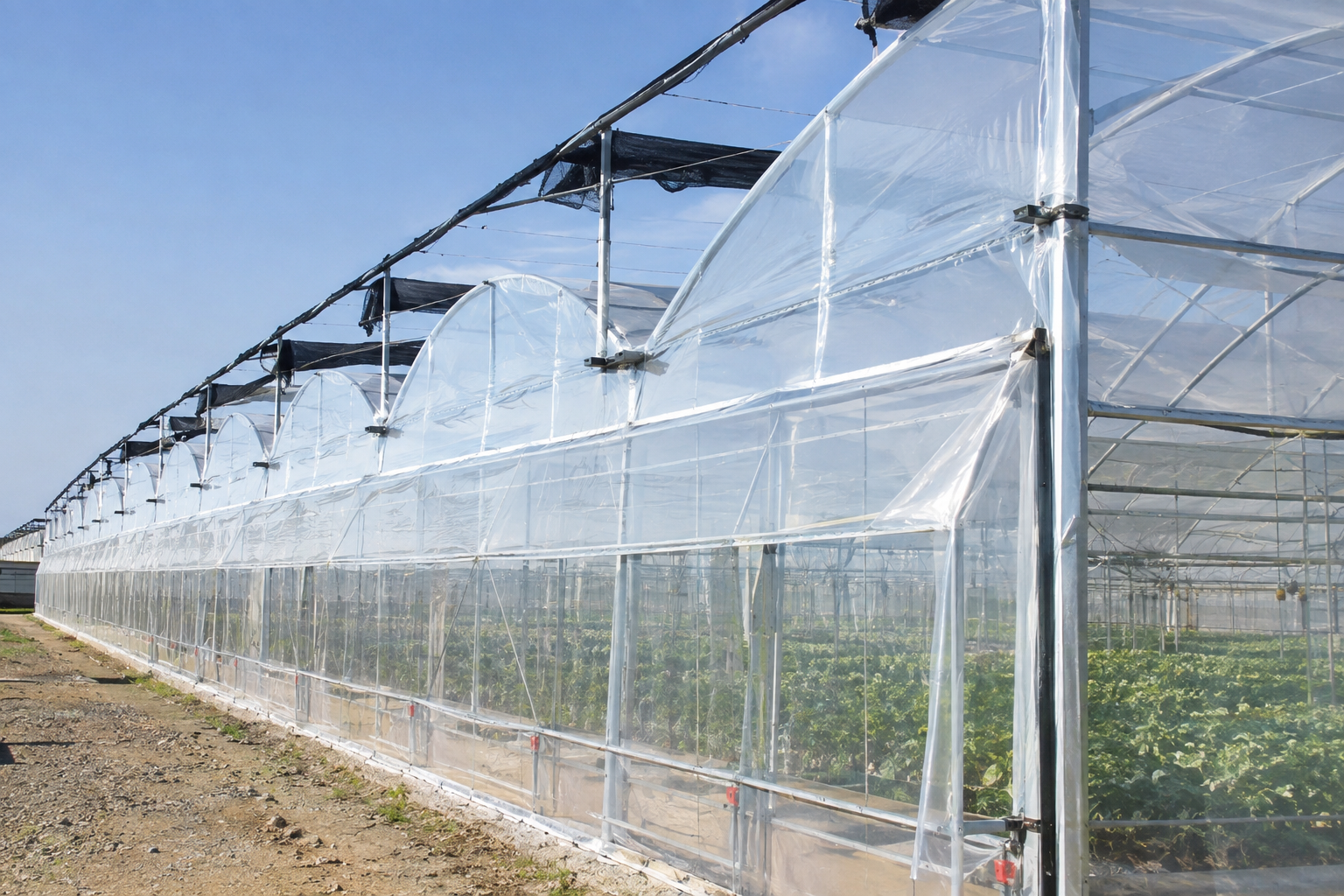
A durable greenhouse film creates a protective layer over the growing structure. At the same time, it allows sunlight to reach the crops while reducing direct exposure to unfavorable outdoor conditions.
Therefore, greenhouse film can contribute to more reliable crop production throughout the growing season
How Greenhouse Film Helps Reduce Crop Stress
Extreme environmental conditions can place significant stress on plants. For instance, high temperatures may increase water loss, while cold conditions can slow plant growth. Meanwhile, excessive condensation and moisture can create additional challenges inside the greenhouse.
To help manage these conditions, greenhouse film can be manufactured with several functional properties, including:
- UV protection
- Thermal insulation
- Light diffusion
- Anti-drip performance
- Moisture management
- Weather resistance
Together, these features can help create a more suitable growing environment. Consequently, growers can better manage environmental conditions and support more consistent crop development.
Why UV-Resistant Greenhouse Film Matters
Because greenhouse film remains exposed to sunlight for extended periods, UV resistance is an important factor when selecting a product.
Standard plastic materials may deteriorate more quickly under continuous UV exposure. In contrast, UV-resistant greenhouse film is designed to provide improved durability under outdoor agricultural conditions.
As a result, commercial growers may reduce the frequency of film replacement and potentially lower long-term maintenance requirements.
For this reason, UV resistance should be considered alongside film thickness, climate, installation conditions, and expected service life.
Anti-Drip Greenhouse Film for Commercial Farming
Condensation is another common issue inside greenhouses.
When temperature and humidity change, water droplets can form on the inside surface of greenhouse film. If these droplets fall directly onto plant leaves, they can increase moisture around the crop canopy.
Anti-drip greenhouse film is designed to help reduce the formation of large water droplets by encouraging condensation to flow along the film surface.
Consequently, this feature can be particularly valuable for commercial vegetable, flower, and nursery production where humidity management is important.
How to Choose the Right Greenhouse Film
Not every greenhouse project requires the same type of film. Therefore, commercial growers should evaluate several factors before making a decision.
| Factor | What to Consider |
|---|---|
| Crop Type | Vegetables, flowers, seedlings, fruits |
| Climate | Hot, cold, humid, dry, windy |
| Film Thickness | Based on durability and application |
| UV Resistance | Important for outdoor service life |
| Light Transmission | Match crop light requirements |
| Thermal Performance | Useful in colder growing conditions |
| Anti-Drip | Helps manage condensation |
| Greenhouse Structure | Match film to installation requirements |
Ultimately, greenhouse film should be selected according to both crop requirements and local environmental conditions rather than based on a single specification.
Greenhouse Film for Different Commercial Crops
Because different crops have different environmental requirements, greenhouse film can be used across a wide range of protected agriculture applications.
For example, commercial growers commonly use greenhouse structures for:
- Tomatoes
- Cucumbers
- Peppers
- Lettuce
- Strawberries
- Flowers
- Nursery plants
- Seedlings
Depending on the crop and growing environment, the appropriate film can help growers manage light, temperature, moisture, and weather exposure more effectively.
In this way, greenhouse film becomes part of a broader protected-crop production system rather than simply acting as a structural covering.
Our Greenhouse Film Solutions
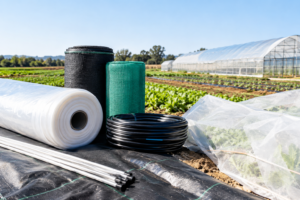
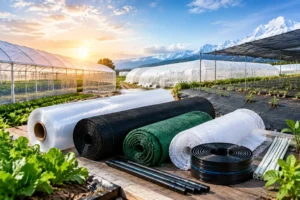
In addition to greenhouse film, our agricultural protection product range includes:
- Shade net
- Insect net
- Plastic mulch
- Weed control fabric
- Drip irrigation tape
- Fiberglass rods
By combining different agricultural protection materials, growers can develop solutions according to their crops, climate, greenhouse structure, and production requirements.
Furthermore, customized specifications can help commercial projects address different installation environments and application needs.
Conclusion
Ultimately, greenhouse film plays an important role in creating a more stable growing environment for commercial farming. By helping manage temperature, control light, protect crops from weather, and improve greenhouse conditions, the right film can support healthier plants and more consistent production.
At the same time, choosing greenhouse film should involve more than simply comparing price or thickness. Growers should consider crop type, climate, light requirements, UV resistance, thermal performance, anti-drip properties, durability, and greenhouse structure.
In short, the right greenhouse film is not simply a greenhouse covering—it is an important component of a complete crop protection and production system.